

Marketing communication strategies start with explaining what you sell
Content Marketing Guides Marketing Strategy
Most marketing communication strategies start with channels. For a small business, explanation pays first: one-sentence offer, examples instead of adjectives, the next steps and one picture, applied to your website, Google Ads and sales emails.
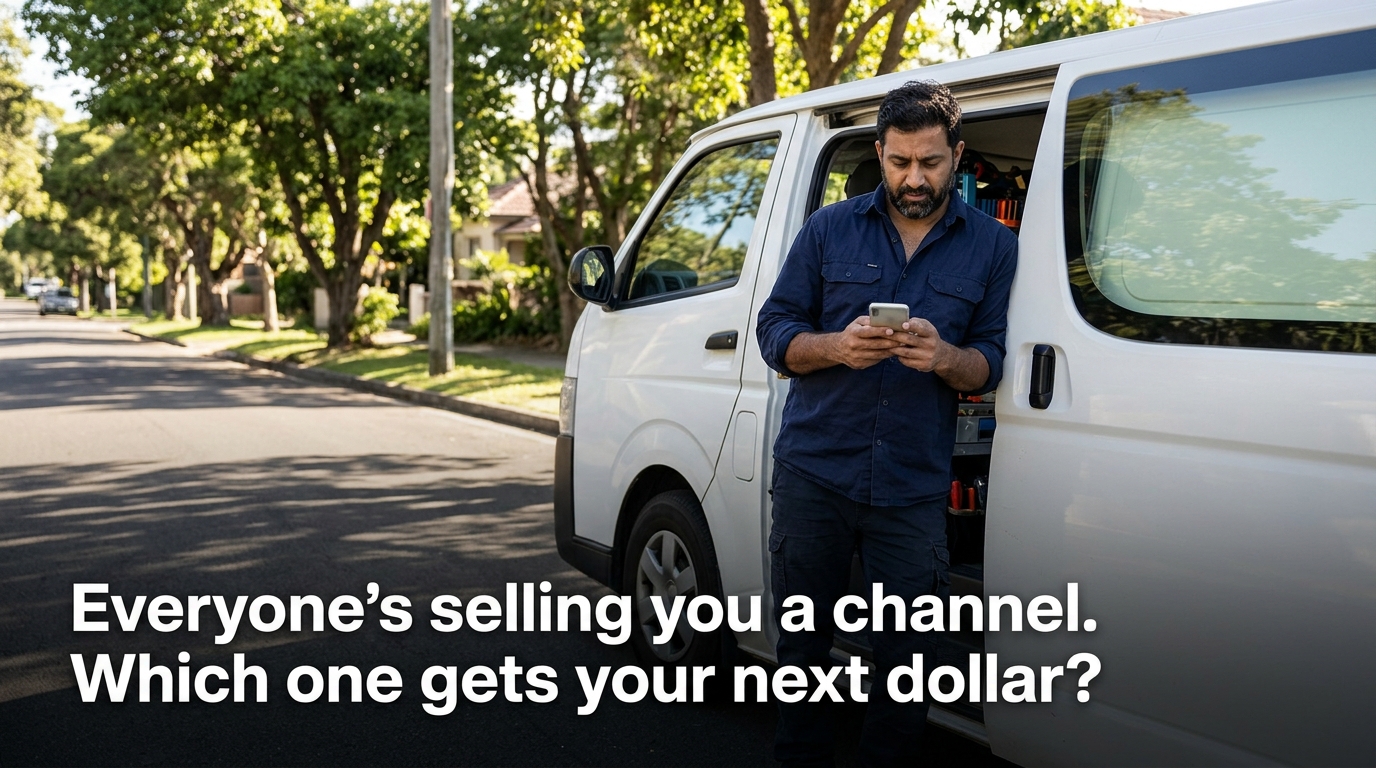
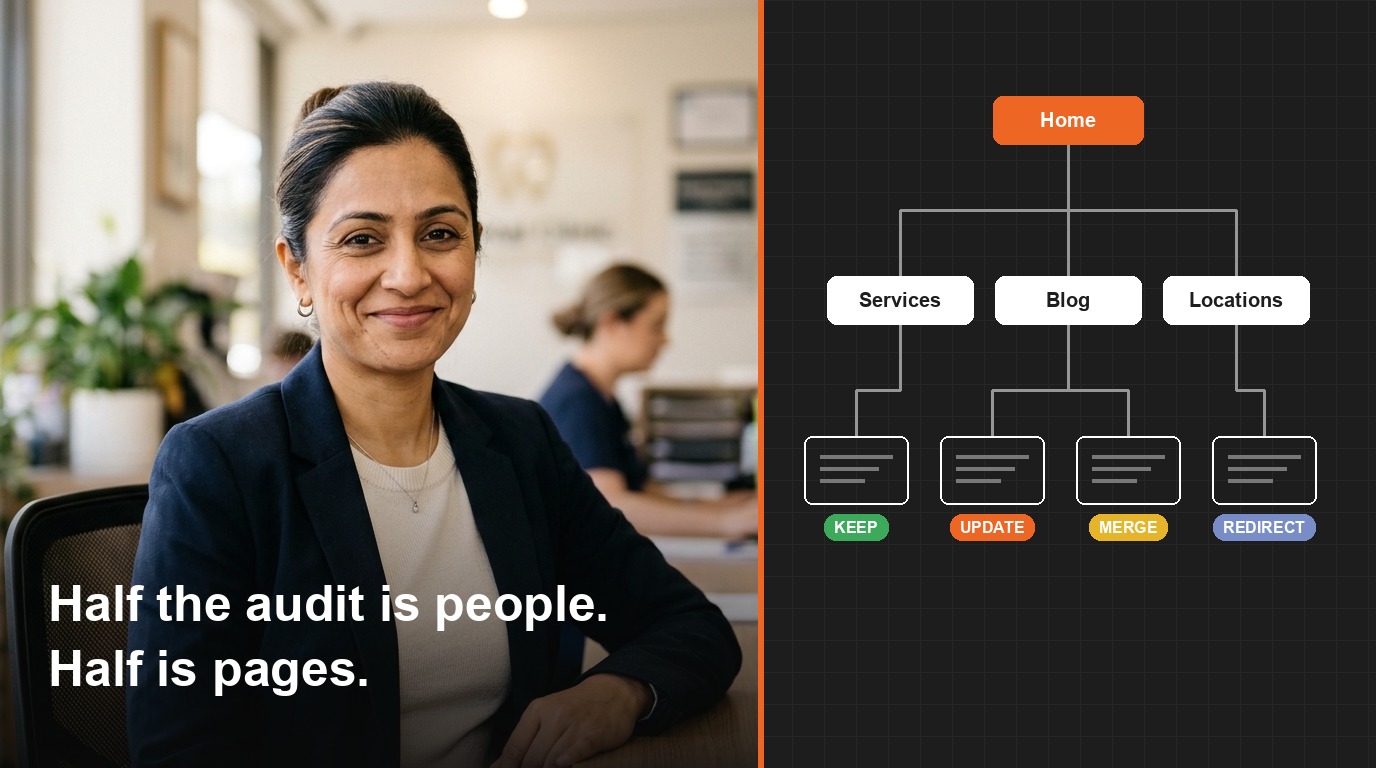
Most small businesses are fixing the wrong part of their marketing. The usual advice on marketing communication strategies starts with channels: a content calendar, a list of platforms, a slide about the “marcom mix” (marketing-speak for which channel says what). I’d start somewhere far less glamorous: the explanation. If a stranger can’t repeat what you sell after ten seconds on your website, every extra channel just spreads the confusion further.
The fix takes four moves: write the offer in one sentence, prove it with examples, show the next steps, and use one picture or comparison people already understand. Below is where each goes on your website, ads and emails, plus a free test to run this week.
To be fair to the textbooks, the standard frame isn’t wrong. Objectives, audience, messages, measurement: it all matters. It’s just built for organisations with marcom teams, not a five-person firm where the owner writes the homepage on a Sunday night.
Why most marketing communication strategies miss the problem you can’t see
The usual advice on communication strategies for marketing treats reach as the bottleneck. For most small businesses, it isn’t. The harder problem is that the owner already knows too much.

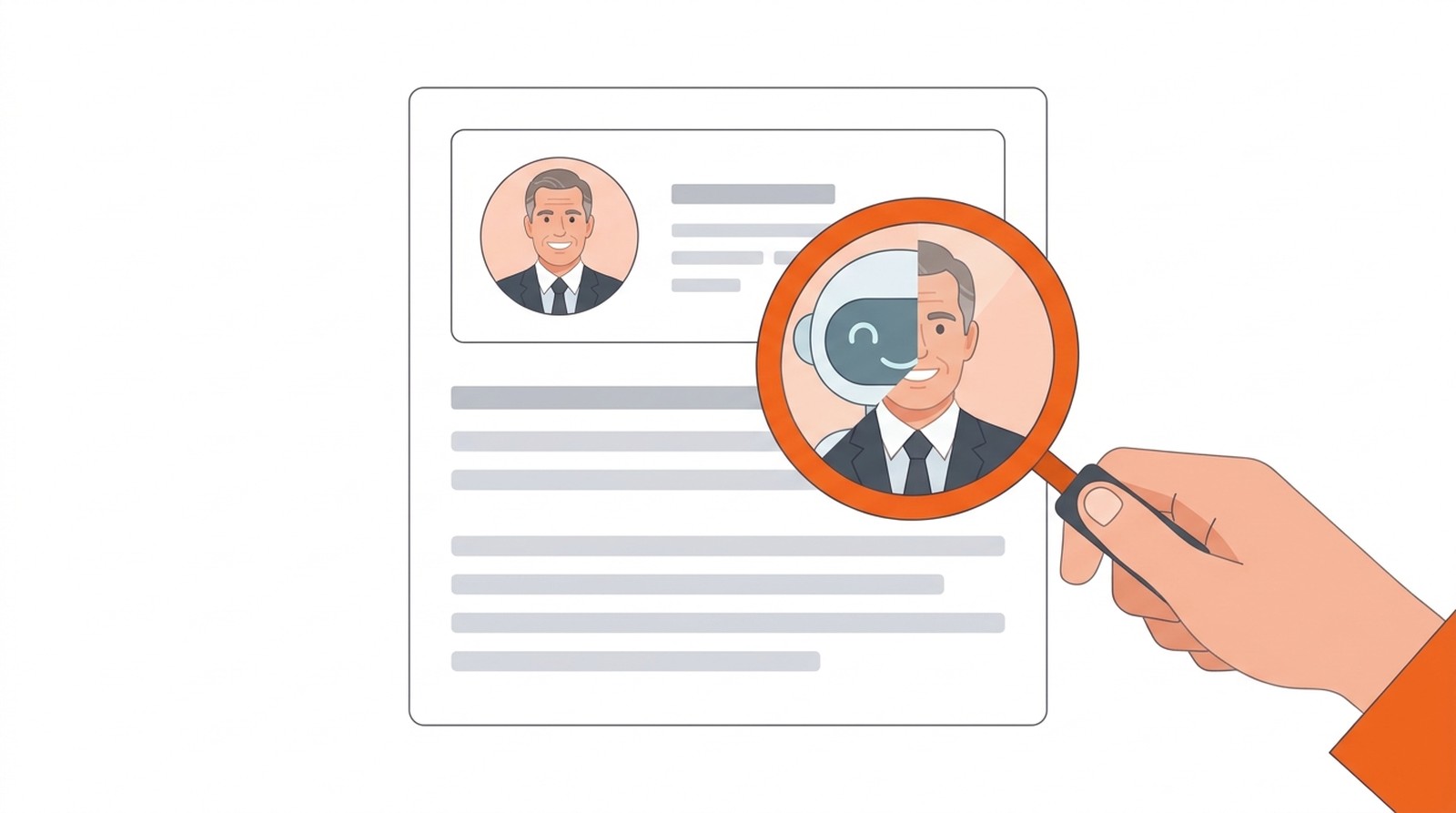
Chip and Dan Heath called this the curse of knowledge in Harvard Business Review in December 2006. Experts squash concrete knowledge into abstract phrases like “Achieving customer delight!” In their heads, the phrase is full of detail. Listeners only hear the phrase. The small business version is “end-to-end solutions”.
I came across a Common Craft explainer video around 2010, then read Lee LeFever’s book The Art of Explanation. Both make the same point: the person who knows the most is often the worst at explaining it. And online, you don’t get long.
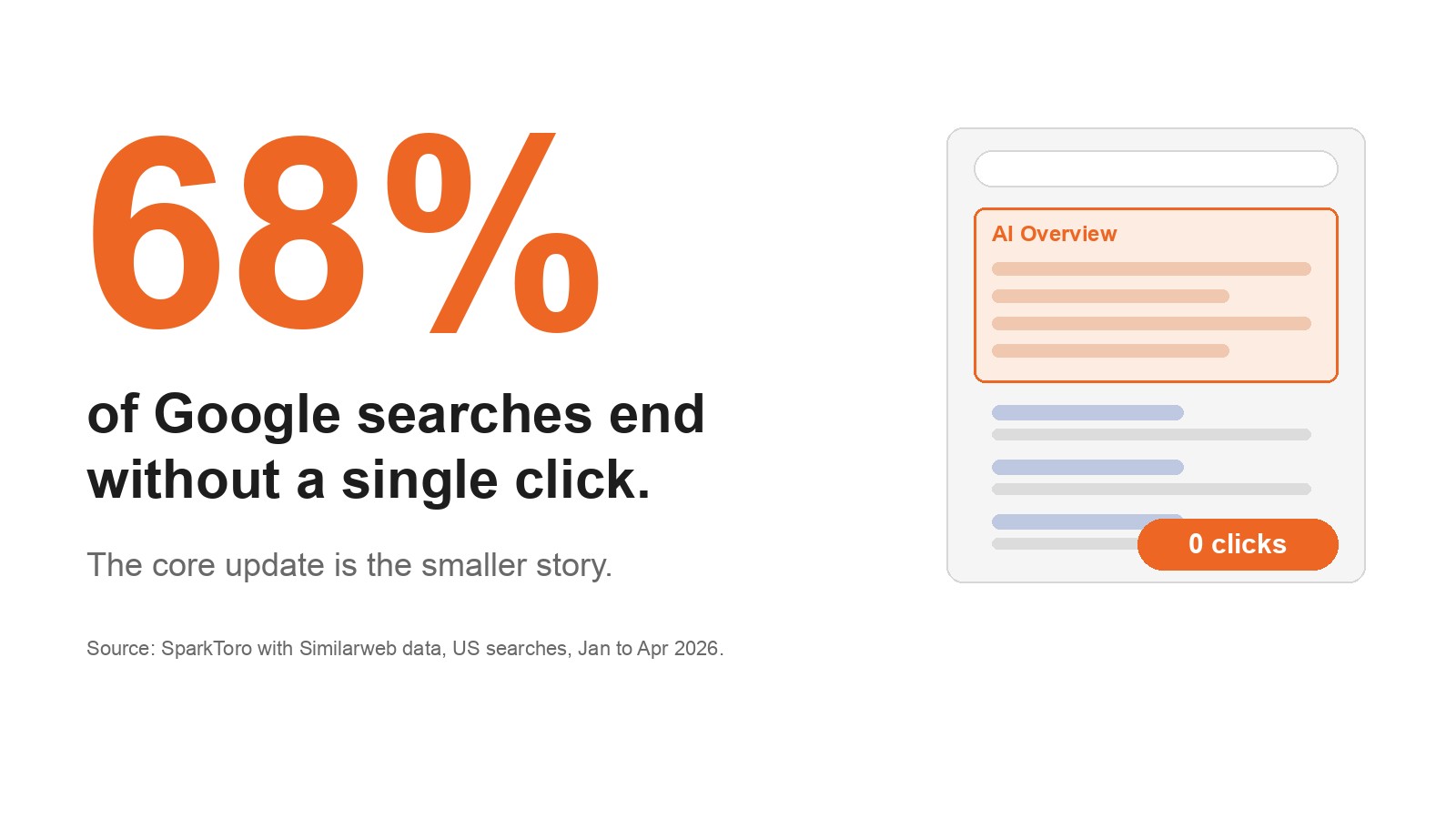
Jakob Nielsen at Nielsen Norman Group found that users often leave a web page within 10 to 20 seconds, while pages with a clear value proposition hold attention much longer (2011). An earlier study of his found that people read at most 28% of the words on an average page, and 20% is more likely (2008).
On a 500-word homepage, that’s 100 to 140 words. You don’t get to choose which ones. None of this replaces a proper marketing strategy. It’s the part that has to work before the rest of the plan can.
Write your offer in one sentence a stranger could repeat
If your offer needs a paragraph, customers will summarise it for you. Usually wrongly.
The shape is simple: what you do, for whom, and where or how. Clever taglines can come later, if ever. Say you run a mobile dog grooming van in Penrith (a made-up business). The before and after:
- Don’t: “Holistic, premium pet care solutions tailored to you.”
- Do: “We groom your dog in our van, in your driveway.”
Now test it. Read it to someone outside your industry (not your partner, not your staff) and ask them to say it back. Pass: they use your words. Fail: “Ah, pet stuff?”
The Australian Government Style Manual puts it bluntly: “Plain language helps everyone.” It also says to define specialist terms. If I could cut one thing from most homepages, it’d be the headline that tries to sound impressive.
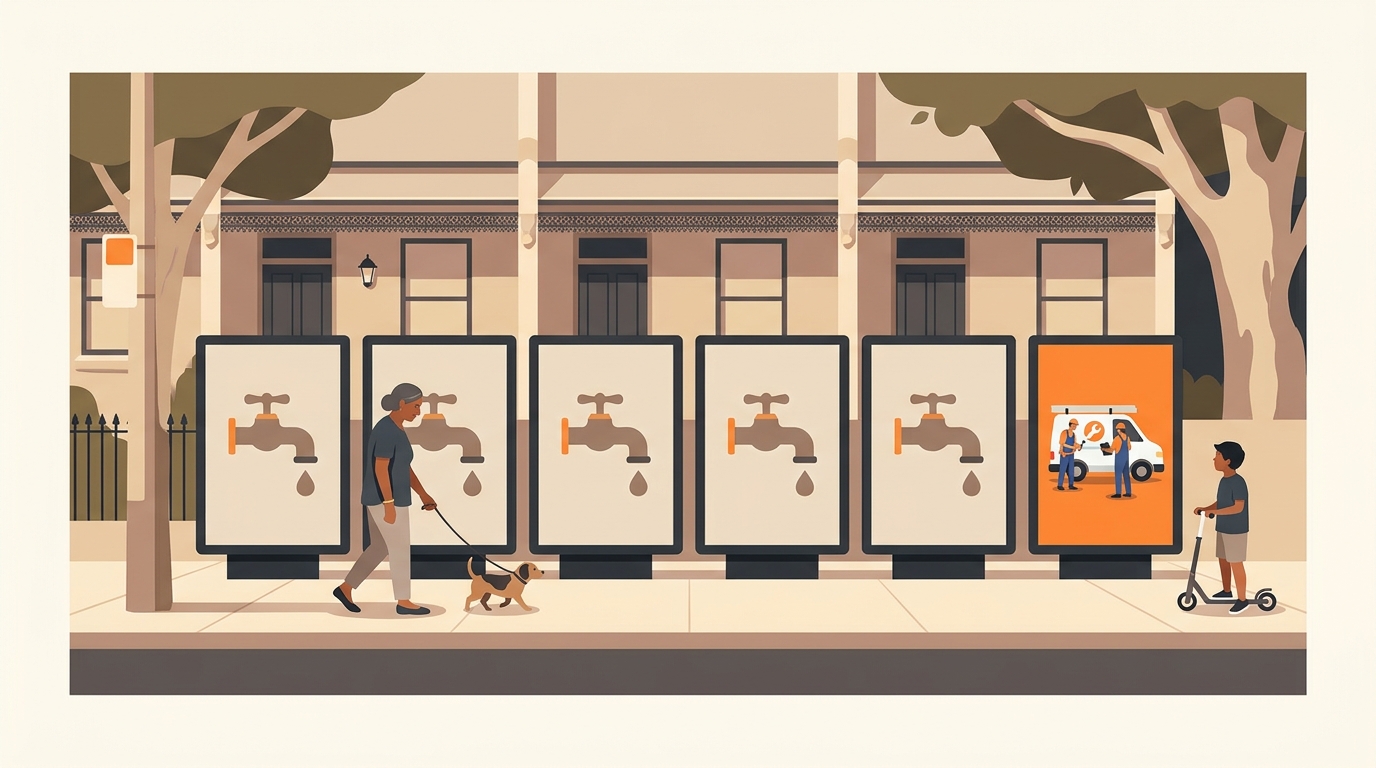
Adjectives are legal. Nobody believes them.
“Quality.” “Trusted.” “Sydney’s best.” None of these break the law, and that’s exactly the problem.
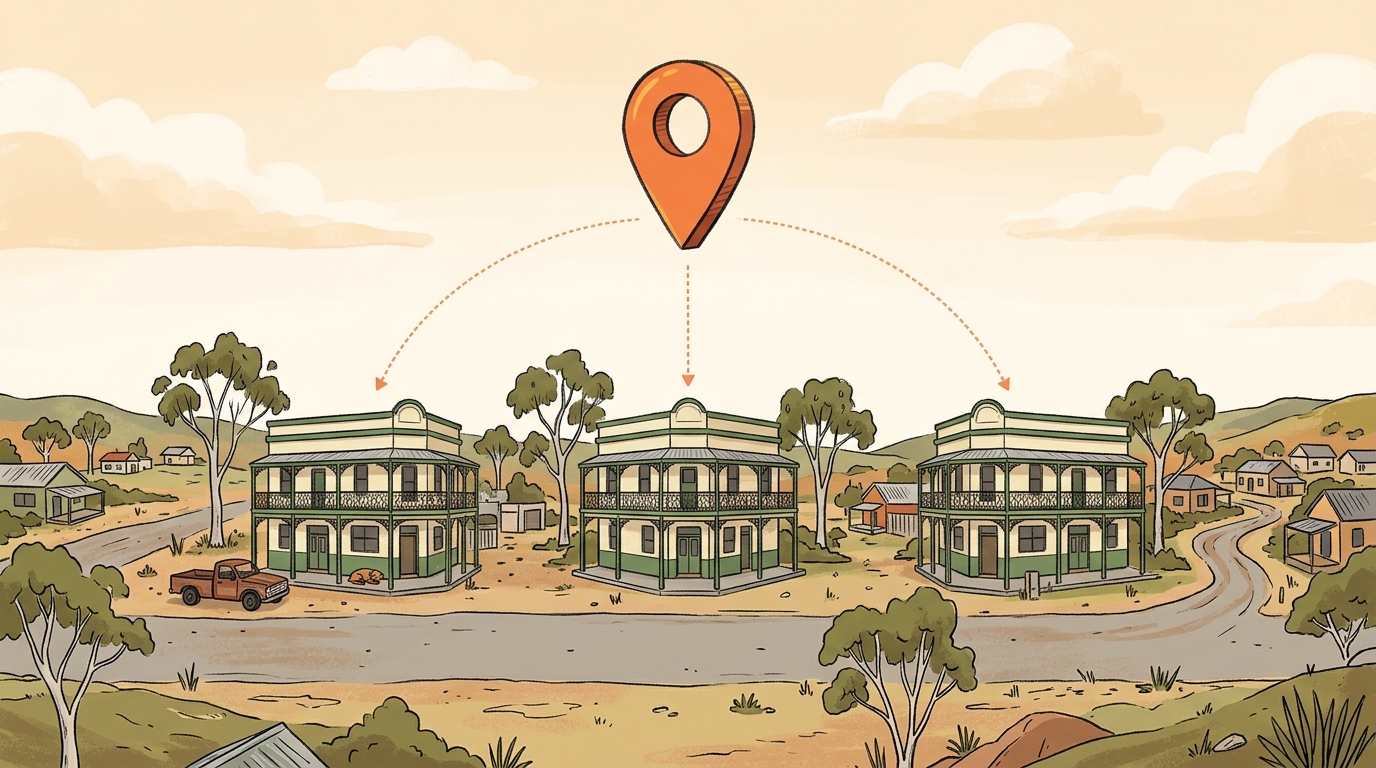
The ACCC describes “puffery” as wildly exaggerated, vague claims no one could treat seriously, like “best steaks on earth”. It’s generally not misleading. That’s the register a lot of small business sites are written in.
The serious bit: once you get specific, it has to be true. “Same-day callback” is a claim a customer can check, so only promise what you deliver every time.
Anyone who’s been to a Saturday open home knows the code. “Cosy” means small. “Renovator’s delight” means bring a skip. Buyers trust the floor plan, not the adjectives.
For the Penrith groomer, swap “gentle, professional care” for a before-and-after of a nervous rescue dog. For a professional services firm, take a bookkeeper:
- Before: “Tailored solutions for all your business needs.”
- After: “We do the books and BAS for Sydney cafés, so you’re not doing receipts at 11pm.”
If you deleted every adjective from your homepage, what would be left?
Show what happens after they call so saying yes feels less risky
People have less to guess when they can picture the next few steps. It turns a vague promise into a visible process. The groomer’s version fits in four lines:
- Book online.
- We park outside your place.
- Bath, clip and nails, in the van.
- We text you when your dog’s done.
I won’t pretend those four lines guarantee more enquiries. They remove one small reason to hesitate, and they cost almost nothing to add.
One comparison or picture does more than a page of copy
LeFever’s method, from Common Craft and his book, moves people from A (knowing nothing) to Z step by step, using context, analogies, examples and visuals. The shortcut is borrowing something they already understand.
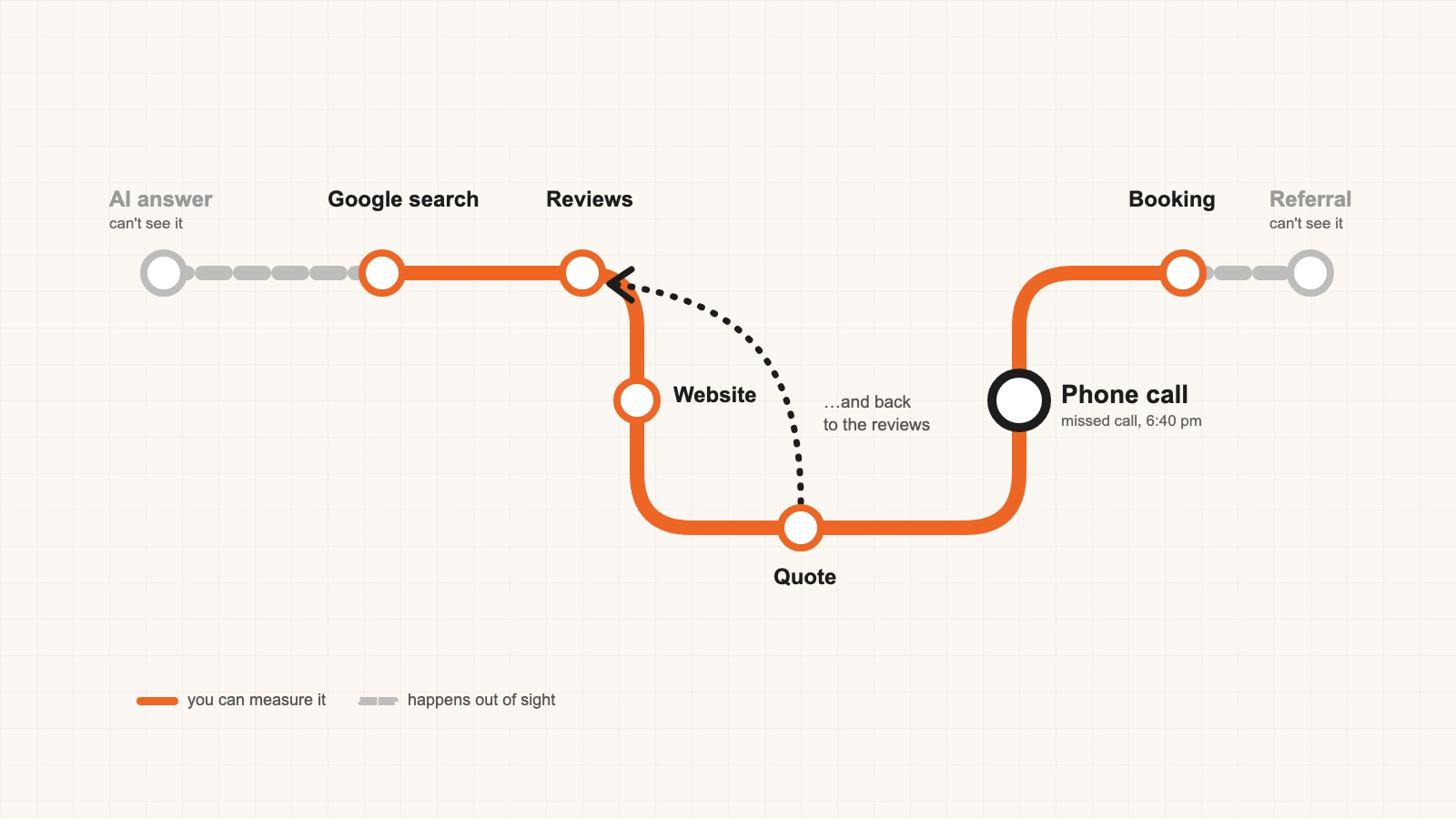
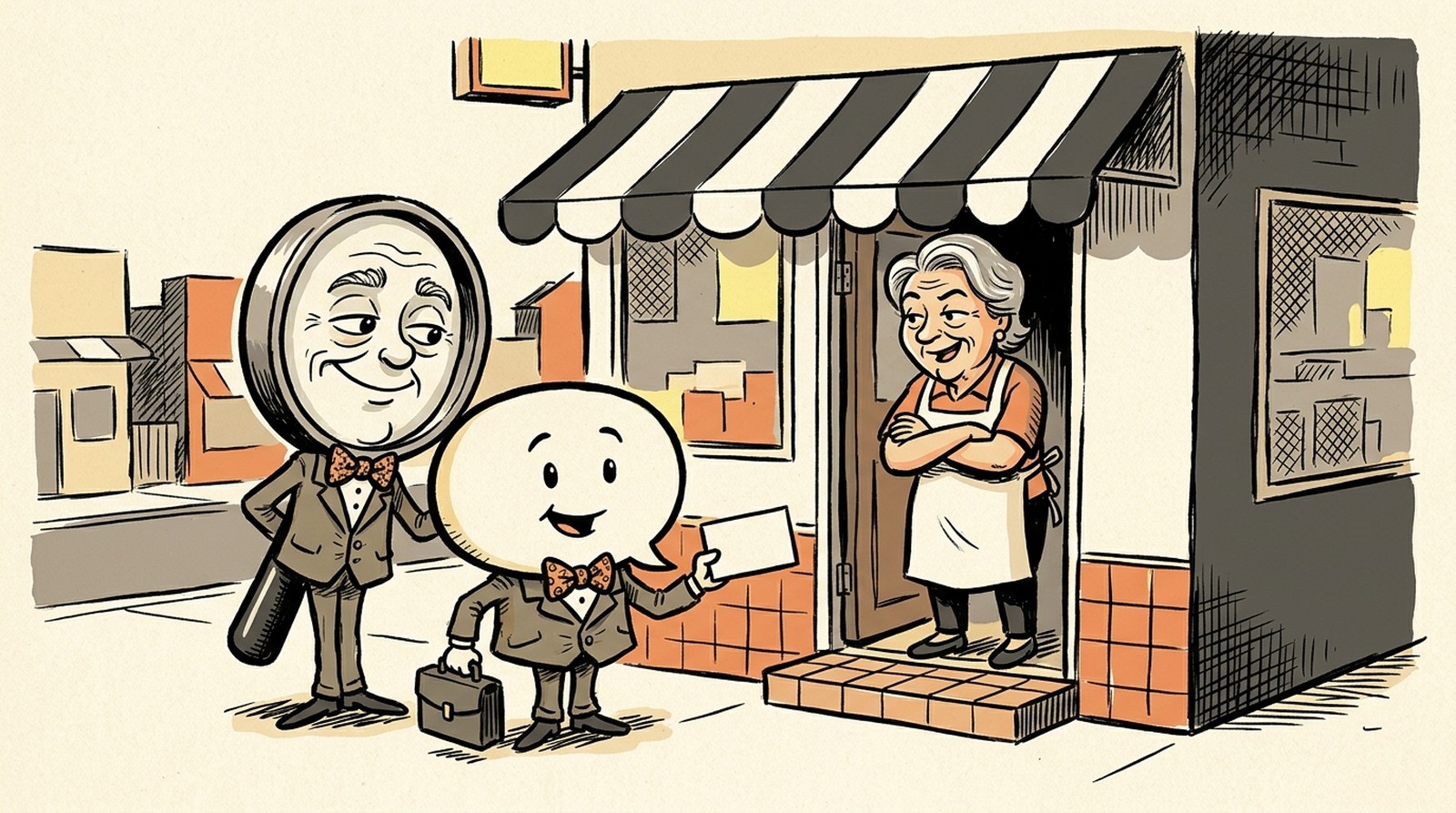
When I talk SEO with clients, I use basketball. One star player can’t win a game alone, and neither can a website: it needs a team of content and links around it. In one workshop, I turned marketing channels into characters to show how they work together. I’ve also animated the customer journey as a loop, from awareness to purchase to advocacy.
Our made-up groomer’s comparison is “Like a salon visit, minus the car ride.” The visual is a 15-second clip of the inside of the van. Making that kind of clip, photo or diagram is most of what good content creation for a small business should be: explaining, not decorating.
Chapman Solicitors: the lawyer talking, not a stock photo
Legal websites love handshakes and gavels. For a strata and property disputes firm, we replaced stock photography and familiar legal-industry claims with an explainer video of the lawyer talking through the issues strata owners face. It sat in a focused landing page with clear service information, direct messaging and a simple enquiry path, fed by targeted Google Ads. You can read what we did for Chapman Solicitors in full.
Four explainer videos worth learning from
Much of how I explain things comes from Lee and Sachi LeFever at Common Craft. I first came across their work in 2010 through a short video that explained SEO with a librarian, and it changed how I explain what we do. Each of these takes something abstract and makes it concrete in a couple of minutes. Watch them for the technique, not the topic.
Lee LeFever on the lost art of explanation (Ignite Seattle). Five minutes on why experts are bad at explaining and what to do about it.
What is SEO? (Common Craft for Search Engine Land). The librarian comparison: search engines as someone who reads and sorts every page so they can point you to the right one.
Social networking in plain English (Common Craft). A neighbourhood as the picture for how social networks connect people you already know.
Net neutrality explained (Common Craft). The internet as a road where every car should travel at the same speed, no paid fast lane.
Pulse isn’t affiliated with Common Craft. We just admire the work.
Put the explanation where your marketing communication strategy meets customers
A homepage gives you a screen, an ad gives you 30 characters, a quote email gives you one line before “hope you’re well”. The four moves still fit in all three.
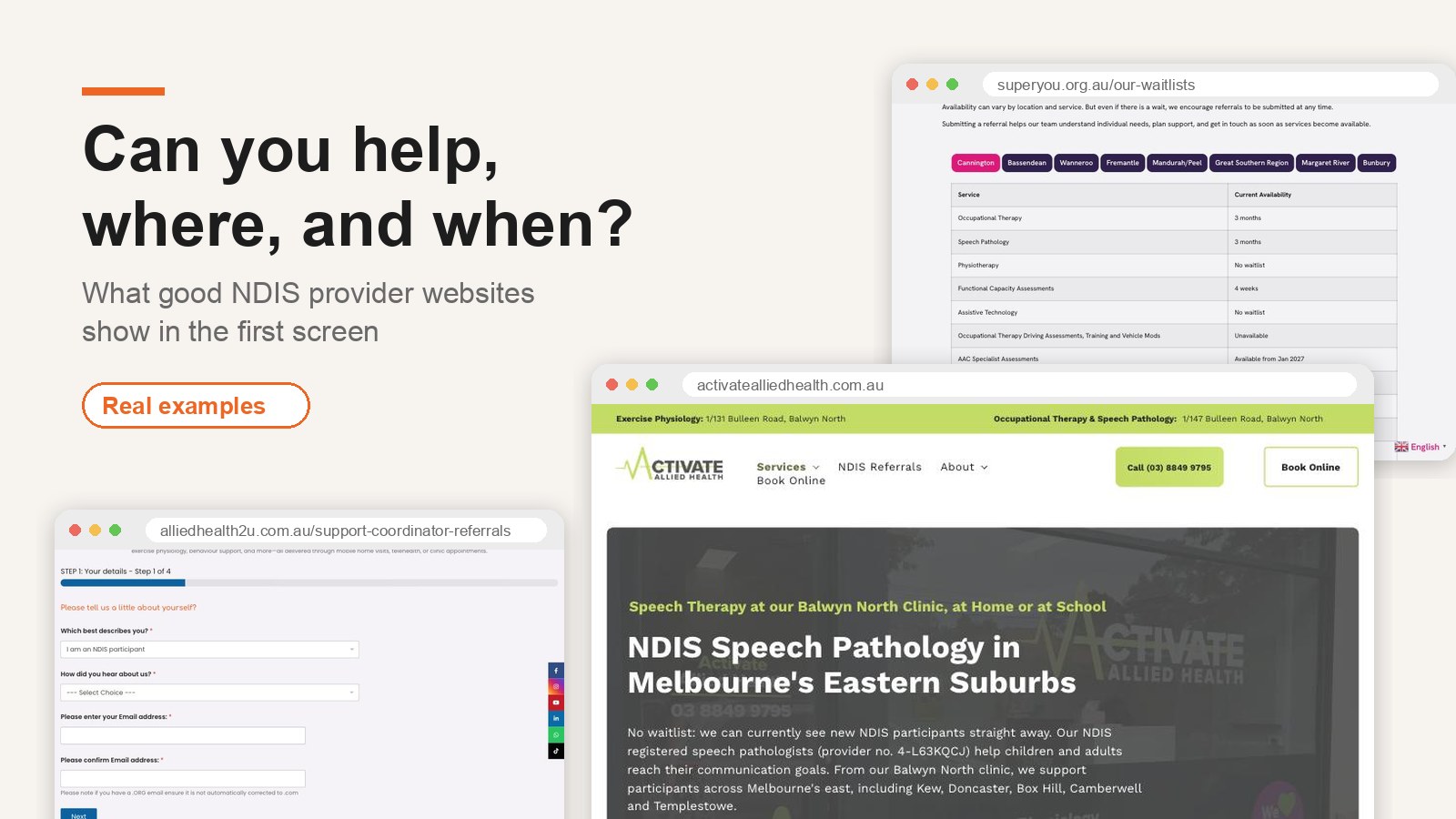
If you only fix one place this month, make it the website. It’s where your ads, emails and posts send people anyway, so a muddy first screen wastes all of them.
Your website’s first screen
Nielsen’s advice is to get your value proposition across within 10 seconds. Above the fold, that means the one-line offer, the steps (or a short version), one real proof point and one button. Don’t put a vague slogan over a stock handshake. Do put the groomer’s one-liner next to a real photo of the van.
Google Ads, 30 characters at a time
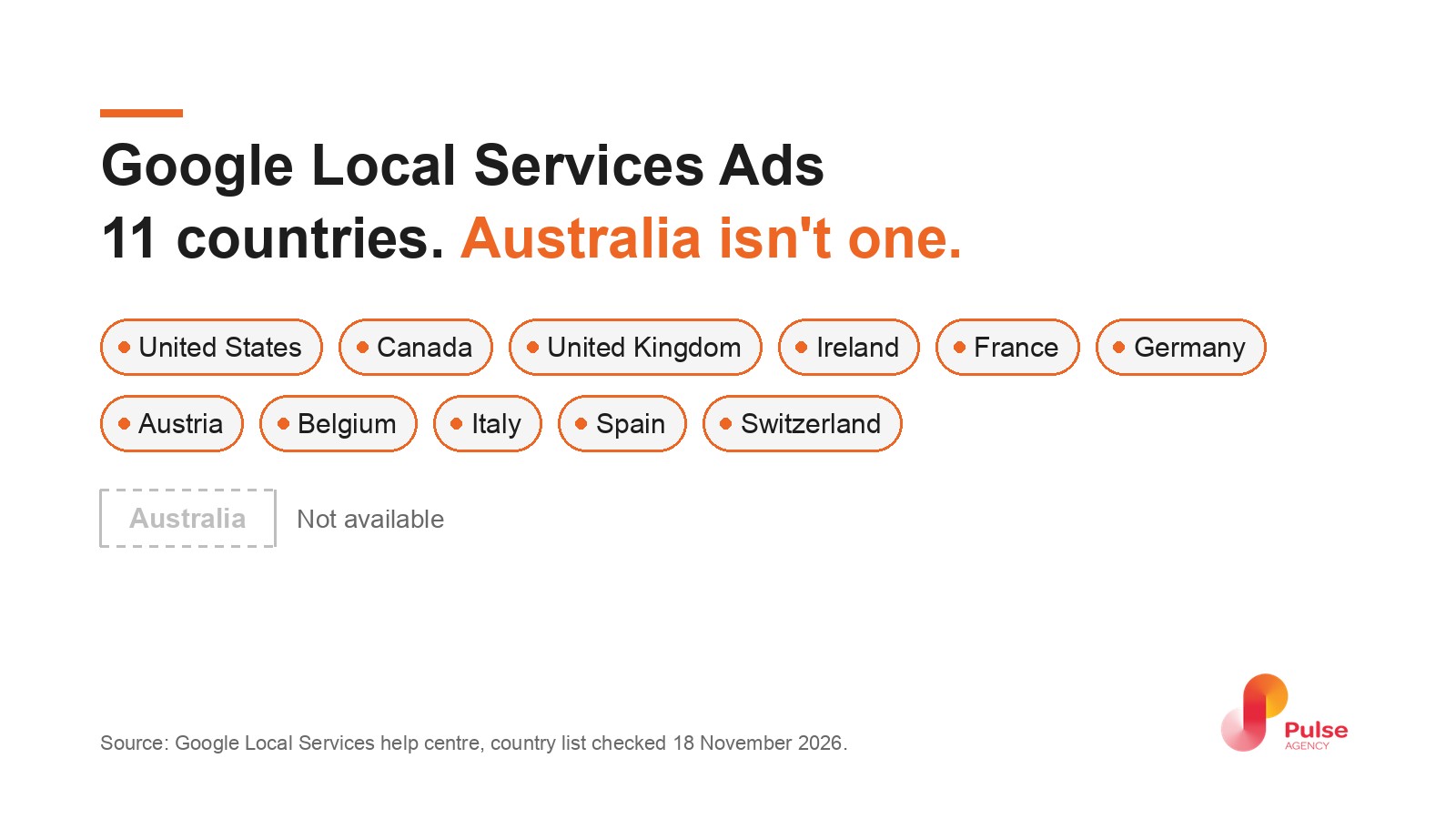
Responsive search ads, the standard Google text ads, take up to 15 headlines of 30 characters and 4 descriptions of 90 characters, according to Google Ads Help. Google mixes and matches them, so each headline has to make sense alone.
- Headline: “Dog Grooming at Your Door”
- Not “Best Groomers in Sydney”, but “Nervous Dogs Welcome”
- Description: “Book online. We arrive in a fitted van. No car ride for your dog.”
Sales emails and quotes
The first line says what they get, for whom and where, before any pleasantries. The Style Manual also recommends a short summary without jargon, which makes a handy rule: two plain lines at the top of every quote. For the groomer, add three photos of the same breed and a clear next step: pick a time, we confirm by text.
Test your message on a stranger, then on every enquiry call
Show your first screen to someone who doesn’t know your business for about ten seconds. Then ask:
- What do we sell?
- Who’s it for?
- What happens if you contact us?
On enquiry calls, ask “What do you think we do?” before explaining anything. Write the answers down for a month. The gap between their answer and your one line is your to-do list.
A clear message won’t save the wrong channels
The strongest pushback is fair. A brilliant line nobody sees sells nothing, where you show up matters, and some offers, like complex B2B services with long sales cycles, can’t be carried by one sentence. That’s where this approach is weakest.
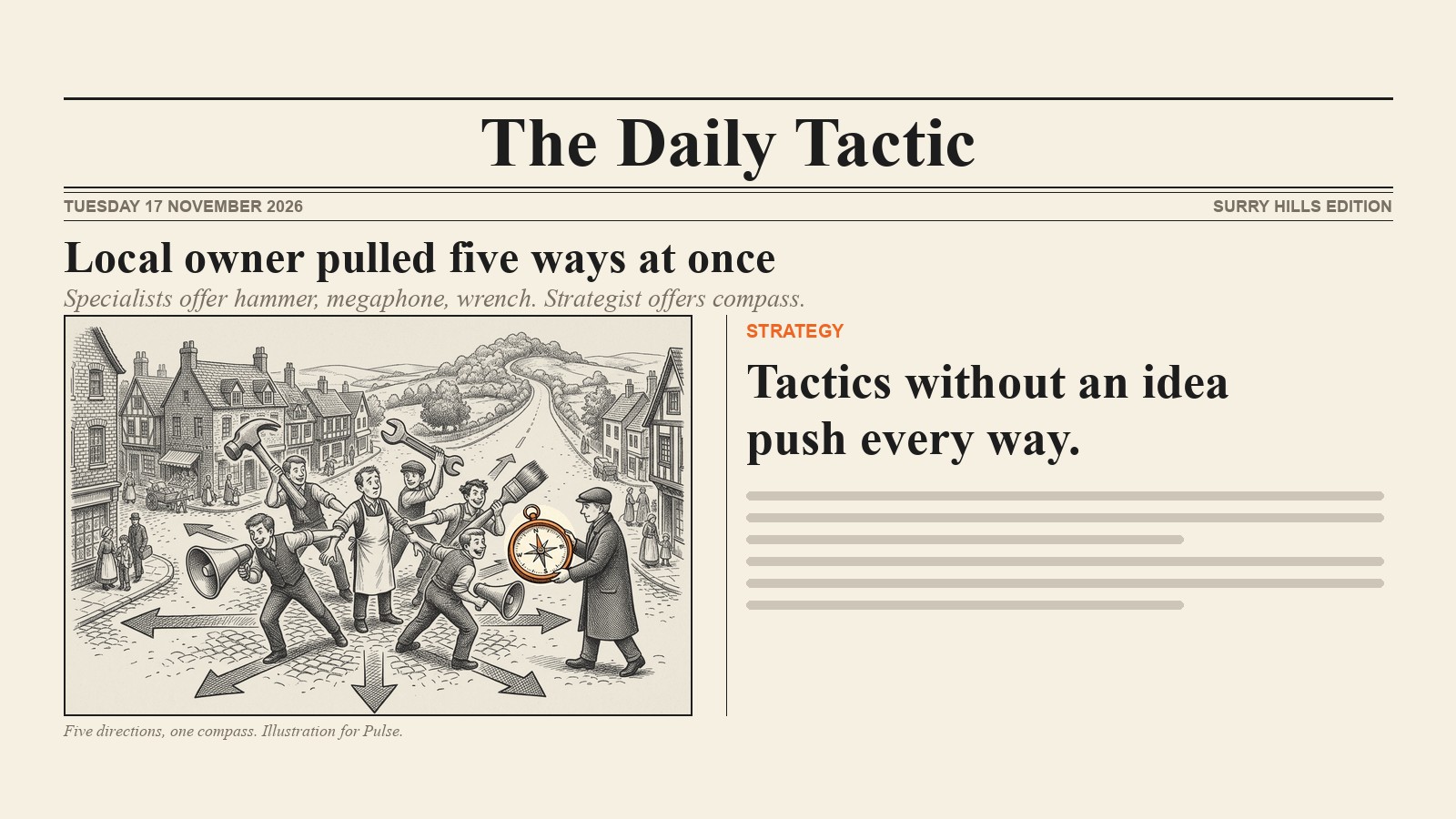
I still hold the view, because the line isn’t the whole pitch. It’s the door. Get people through it, and your ads, posts and emails finally have something worth repeating. Picking where to show up is the other half of the job: the difference between marketing strategy and tactics is a good place to start, and so is a content strategy that works for customers and search engines.
If your homepage, ads or quote emails feel muddy, send them through and we’ll tell you where the explanation breaks. One question to sit with first: if I rang your last three enquiries tomorrow and asked what you do, would they say what you’d say?
FAQ: marketing communication strategies for small business
What are marketing communication strategies?
They’re the plans a business uses to get its message to customers: what you say, who you say it to, and where it appears, from your website to ads and emails. For a small business, the most useful part is the message itself. If people can’t quickly understand what you sell, more reach won’t help.
What are 5 effective communication strategies?
For a small business, these five matter most: state your offer in one line a customer could repeat; use examples instead of adjectives; show what happens after someone enquires; use one analogy or visual for the tricky part; and test your message on strangers and real enquiry calls.
What is the difference between marketing and marcom?
Marketing is the whole job of deciding what you sell, to whom, at what price and how people find you. Marcom, short for marketing communications, is the part that talks to customers: website copy, ads, emails, social posts and brochures. Marcom carries the message; marketing decides what it should be.