
Google Ads for law firms: bid on the client’s problem, not on “lawyers Sydney”
Small law firms keep paying to show up for "lawyers Sydney" and counting clicks. Six things I'd push back on, and what to bid on and measure instead.
Small law firms hear the same handful of ideas about Google Ads, and most of them quietly cost money. This column is my pushback.
Paid search can work very well for a practice of three lawyers, or thirteen. But only if you bid on the problem keeping your client awake, not on your profession. And only if you judge it on new matters, not clicks.
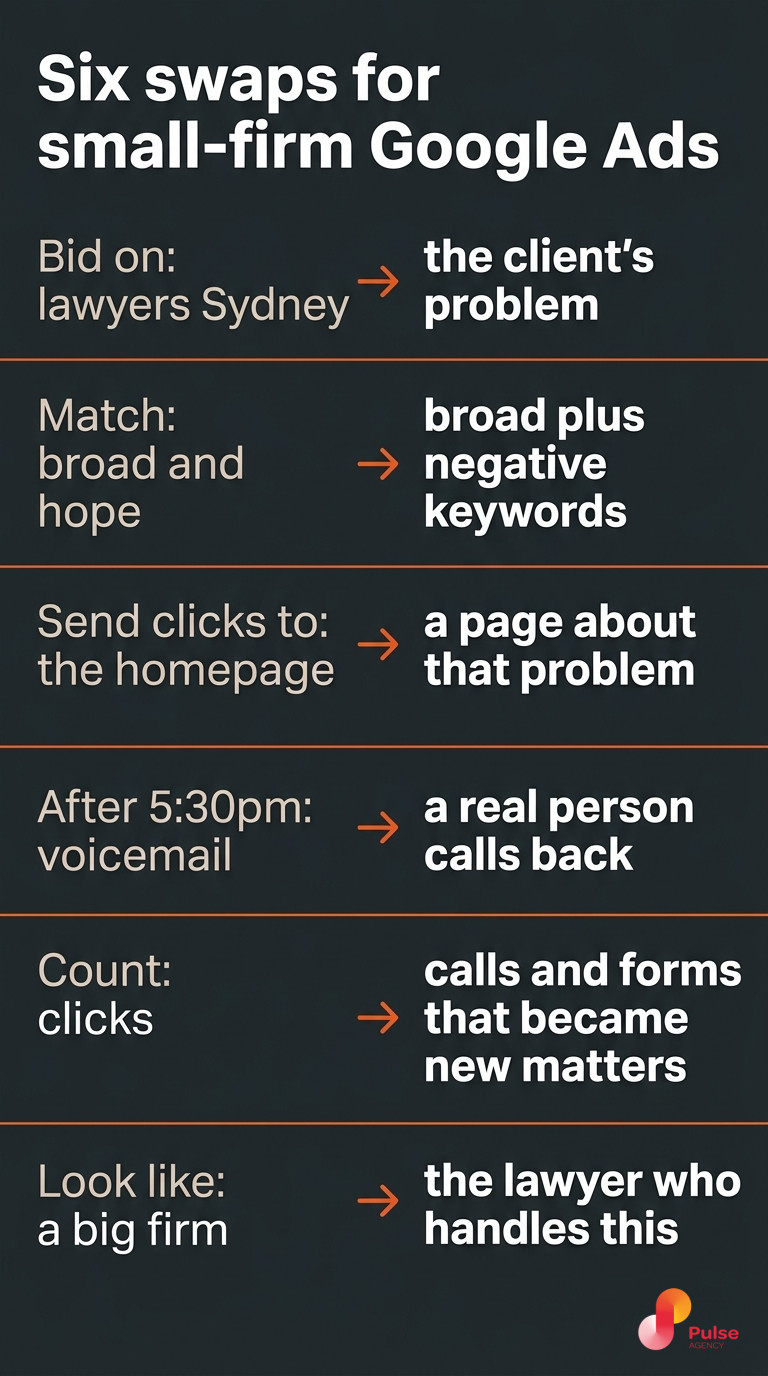
Most advice on this is written for marketers. This one is for partners and practice managers. It follows the client’s path: where you bid, who you pay for, what they land on, who picks up, what you count, and who you are.
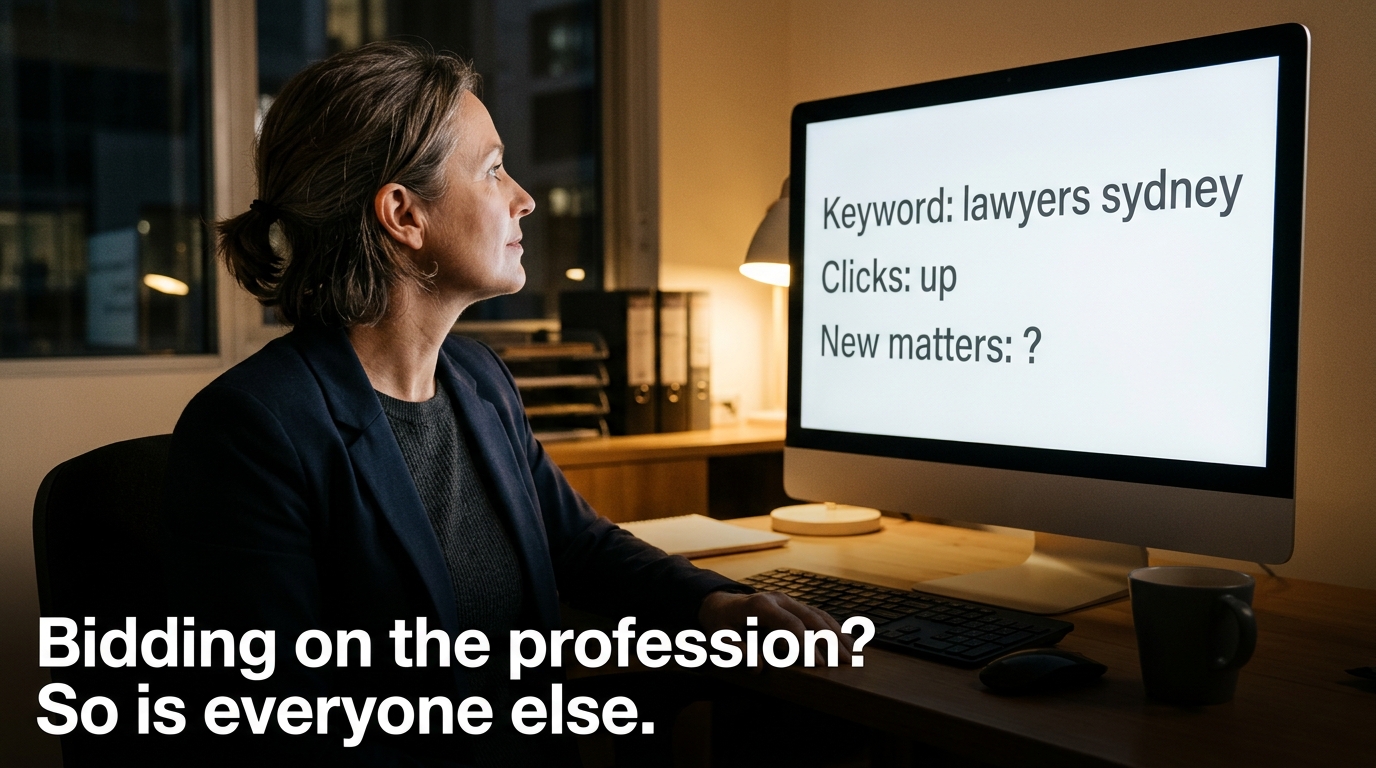
“We need to be at the top for ‘lawyers Sydney'”
It’s the search the partner pictures typing. It feels like the sign above the shopfront, so naturally you want it lit up.
That’s fair, up to a point. Profession searches carry real volume. Some firms win that auction, usually ones with deep pockets and a name people already know. If you can afford it and still make money on each file, go for it.
For most small firms, I’d stop. “Lawyers Sydney” is the busiest, vaguest auction on the page. You’re up against big firms and lawyer directories, paying for someone whose problem you don’t know yet.
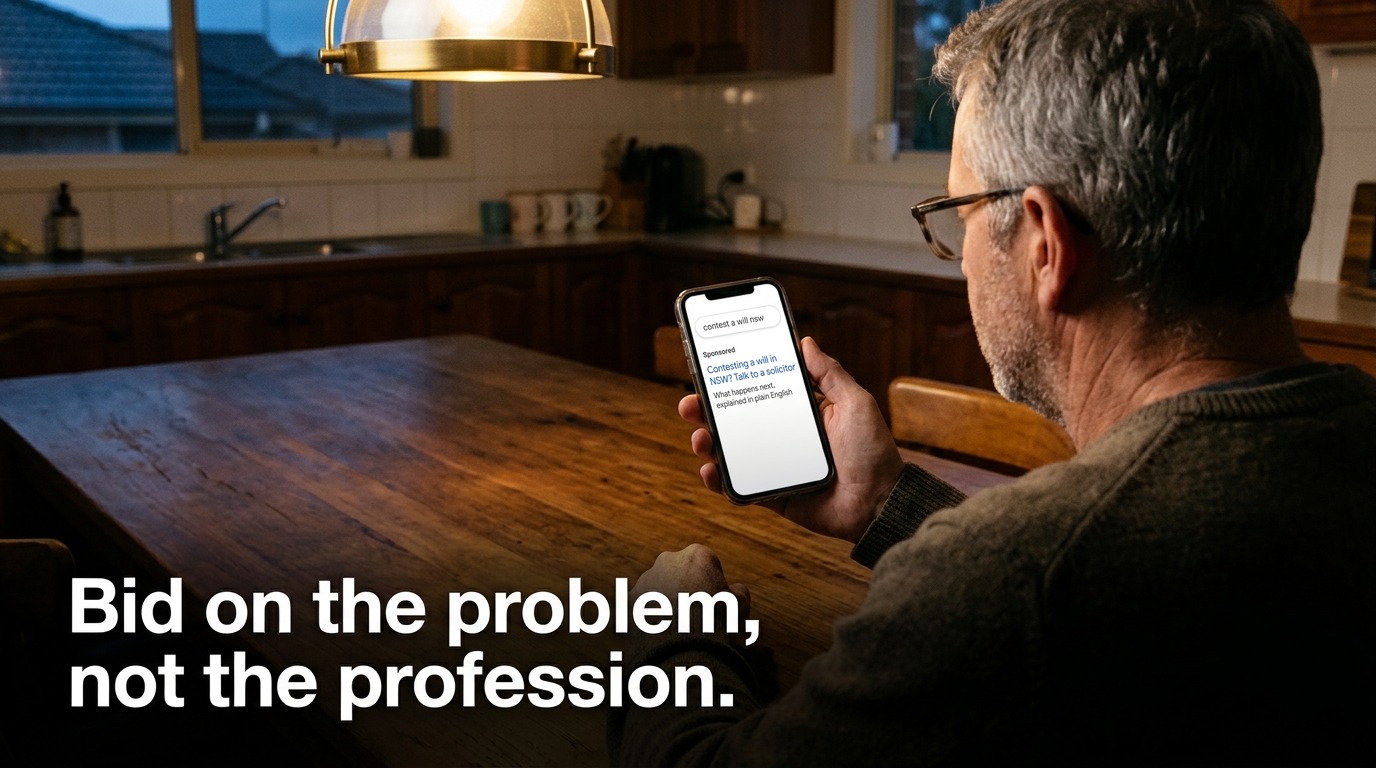
Someone typing “contest a will NSW” has already told you what they need. They’re closer to calling, and closer to what a boutique practice does well. Nobody walks into Bunnings looking for “hardware”. They want a hinge for the cupboard door, and the aisle sign says “hinges”.
- Don’t: run one campaign on “lawyers sydney”, “law firm sydney” and “best lawyers”.
- Do: build separate ad groups for “contest a will nsw”, “family provision claim” and “executor dispute”, each tied to work you want more of.
One honest caveat. I won’t promise problem searches cost less per click (CPC, what you pay each time someone clicks). Sometimes they don’t. The number that counts is cost per new matter. Check your search terms report, the list of what people actually typed before clicking, and see where the money went.
“Broad match will find us more clients”
Match types decide how closely a search has to match your keyword. Google’s page on keyword matching options says broad match can show your ad on related searches, even ones that don’t contain your keyword. Phrase and exact match are tighter.
Broad match isn’t the villain. Google recommends pairing it with Smart Bidding, automated bidding that learns from your conversions. It can surface searches you’d never have thought of.
But it’s only as smart as two things you control: your negative keywords and the result you tell it to chase. Negative keywords are terms that stop your ad showing on searches you don’t want. Skip them and you’re sponsoring law students.
- Don’t: leave “family lawyer” on broad match untouched, so it appears for “family lawyer salary nsw” or “family law graduate jobs sydney”.
- Do: add negatives such as salary, jobs, graduate, course, degree and “how to become”, then review search terms weekly.
Credit where it’s due on one point. Excluding “free” is a decision, not a rule. If you offer a free first consultation, those searchers might be exactly who you want.
Keep one more thing in mind. Smart Bidding chases whatever you call a conversion. Tell it a ten-second call is a win, and it will cheerfully go looking for more of them.
“The ad isn’t working, so we need a new ad”
The ad is the only bit most partners ever see, so it cops the blame.
Copy does matter. Naming the exact problem in the headline tells people they’re in the right place. But the ad is rarely where the client gets lost. It’s the page after the click.
Send a “contest a will” click to a homepage reading “Welcome to our full-service firm, proudly serving clients since 1987”. You’ve just asked a worried person to hunt for the reason they clicked. Many won’t bother.
What I’d do instead is send each click to a page built for that one problem, with:
- a plain-English heading that matches the search
- what happens next, in three steps
- the name and photo of the lawyer who’ll call back
- a tap-to-call number and a short form
There’s a cost angle too. Google’s page About Quality Score lists landing page experience as one of the score’s three parts. Google calls the score a diagnostic tool, not a price tag. Still, Google’s Ad Rank explanation says ad quality helps decide where your ad shows and what you pay.
Before publishing anything, check your state’s rules on legal advertising and Google’s legal requirements policy.
“The leads Google sends us are bad”
Partners remember the time-wasters. Nobody remembers the call that rang out.
Some leads are genuinely poor, and loose keywords make it worse. That part’s on the account.
Picture this: someone finally decides to deal with a parent’s estate. At 5:40pm on a Tuesday they tap your ad, ring and get voicemail. They try the next firm. That lead wasn’t bad. It was unanswered.
This one’s on the firm, not the platform. Phone call conversion tracking records calls from your ads and how long they lasted. Put that next to your own phone system’s log of missed and after-hours calls before blaming the traffic.
Running ads until 9pm when the office shuts at 5:30 is Thursday late-night shopping with the roller door down. Instead:
- Schedule ads for hours someone can answer, or arrange after-hours answering.
- Offer a callback form with an honest promise, like “we’ll call you by 10am tomorrow”.
- Decide, by name, who owns callbacks.
Intake is part of the campaign.
“Clicks are up, so Google Ads for our firm is working”
Clicks lead the monthly report, so clicks become the scoreboard.
They’re not useless. A click is an early signal, and zero clicks is definitely a problem. But a rising click graph above a blank “new matters” line is agency theatre, and agencies, mine included, have to own that. Brand awareness is a nice phrase until a partner asks how many files it paid for.
Here’s the catch: the platform only learns from what you tell it. This is how I’d set up measurement:
- Track calls from the ad itself and to your website number, using website call tracking. You can set a minimum call length so quick hang-ups don’t count.
- Track web form enquiries as conversions, meaning actions you’ve told Google count as a win.
- Mark which enquiries became matters. Save the Google click ID (GCLID, a code attached to each ad click) with the enquiry. When the matter opens, upload it as an offline conversion.
- Let Smart Bidding chase matters, not phone taps. Once opened matters are imported and set as the conversion Google optimises towards, the machine is pointed at the right outcome. It won’t fix a bad account on its own.
If you’d like the plain-English version of the phone side, I’ve written more about call tracking.
Then ask for one number: spend divided by new matters. Compare that cost per matter with what a typical matter in that practice area is worth to you. A good figure depends on the area, the location and your fees, so nobody can give you one answer.
The conversation still changes. Picture it with made-up numbers: two extra estate disputes a month, or 400 extra clicks. Only one tells a partner whether to keep spending.
“Google Ads for lawyers is a big-firm game, so we should look like a big firm”
I understand the instinct. Big firms can afford the generic auction, and people know their names. Looking polished feels like the price of entry.
This is where I push back hardest. “Award-winning. Full service. Trusted since…” throws away a boutique firm’s one real edge. You do this particular thing, and this particular person will call back. Your pages should say so: “We focus on will disputes in NSW. Talk directly to the solicitor who’ll run your matter.”
Our case study on Chapman Solicitors covers a lead generation funnel built for a niche legal practice. Specific beats generic. It’s the same thread that runs through our work with professional services firms.
The strongest argument against all this is that paid search is rented attention. Stop paying and the phone goes quiet. That’s true, which is why organic search is the other half of this argument: SEO for law firms. Problem pages built for ads tend to be the pages worth ranking later.
Where I could be wrong: in a few practice areas, a strong generalist brand might win. That’s a hunch, not a finding.
One task before Friday
Pull last month’s enquiries and count how many became matters. If nobody can answer, that’s your first fix. If you’d like a second pair of eyes, we can review your Google Ads account, or book a call.
I’m aware an agency owner lecturing lawyers about vague language is a bit rich. My industry gave the world “synergy”.
Which of these six have you said this month?
Frequently Asked Questions
Do Google Ads work for small law firms?
Yes, when the account bids on specific client problems rather than generic profession terms, and is judged on new matters. Google lets you track phone calls and form enquiries as conversions, then import which ones became matters using the Google click ID.
How much should a law firm spend on Google Ads?
It depends on the practice area, location, competition and what a typical matter is worth. Work out your cost per new matter, then compare it with your average matter value.
Can Australian lawyers advertise on Google Ads?
Yes, within the rules. Check your state’s legal profession advertising rules and Google’s legal requirements policy before publishing ads or landing pages.