Google core update, November 2026: leave your website alone until December
The November 2026 core update is rolling out. Leave the site alone, measure in December, and watch the bigger change: zero-click search.
Google started rolling out the November 2026 core update on 10 November, and it can take up to two weeks to finish. For an Australian retailer or tradie, that’s the worst possible timing: rankings wobble right when the Christmas money is on the table.
The temptation in week one is to rewrite the homepage, change every title and delete half the blog. I’d leave the website alone until the rollout is finished. Google’s own advice is the same, and the numbers you’d be reacting to aren’t finished yet.
The update also isn’t the biggest change on that results page. The bigger one often sits above your listing, and it’s there whether a core update is rolling out or not.
What Google actually tells you to do after a core update
Google’s documentation on core updates is unusually specific. First, confirm the update has finished on the Search Status Dashboard. Then wait at least a full week after it completes before analysing your site in Search Console. Then compare a week after the update with a week before it started.
For this update, that means a rollout that can run until around 24 November, a first proper look in early December, and a comparison against the first week of November. Anything you see before then is a site in the middle of being re-ranked.
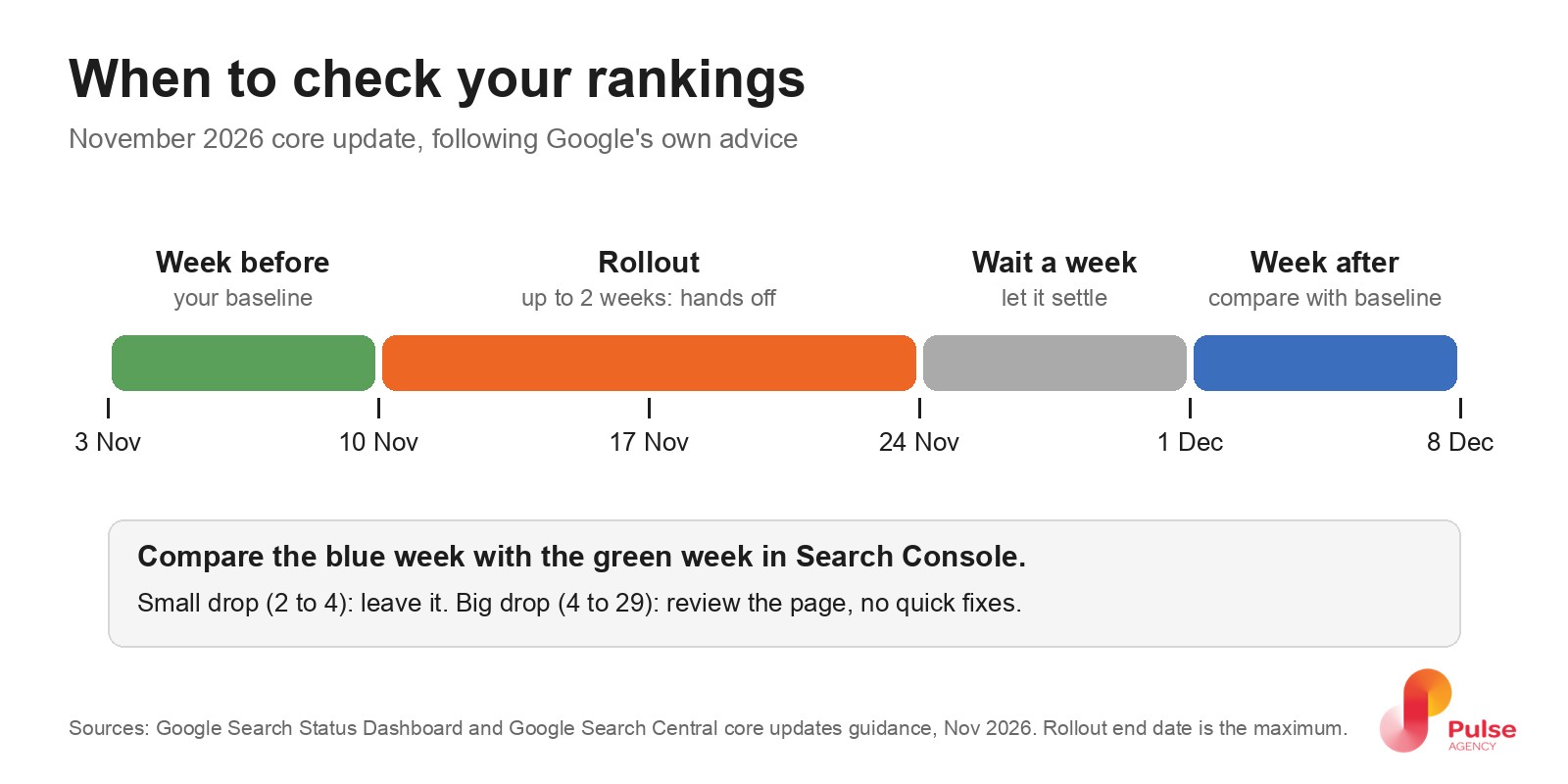
Google also separates small drops from big ones. A move from position 2 to 4 doesn’t need drastic action, and Google recommends not touching content that’s already performing well. A fall from 4 to 29 deserves a deeper look at whether the page is genuinely the most helpful answer. And Google warns against “quick fix” changes, like ripping out a page element because someone said it was bad for SEO.
Two more things before anyone panics. A core update isn’t a penalty: open the Manual Actions report in Search Console, and if it’s empty, nobody at Google has flagged your site and there’s nothing to appeal. And recovery is slow by design. Google says improvements can take effect within days, but it can take several months for its systems to confirm a site is consistently helpful, sometimes not until the next core update.
Patience is a strategy here, not laziness. Changing ten things during a rollout means you’ll never know which one helped or hurt.
Finding the cause comes before rewriting. For Pinnacle Team Events, we found why search traffic fell and fixed it; goal completions rose 72% and website visitors 33% in seven months.
The bigger change is sitting above your listing
While everyone watches the update, the layout of the results page has changed far more. According to Semrush data reported by Search Engine Roundtable in October 2026, AI Overviews now appear on more than 80% of the Google searches Semrush tracks, up from about 50% in June 2025. Other studies measure it differently: seoClarity sees about 62%, and SE Ranking found AI Overviews on 82.5% of US brand searches. The exact figure depends on which searches you count. The direction doesn’t.
What the animation shows: four everyday searches, from lease reviews to SEO audits. Each time an AI answer drops in at the top and pushes the website results down, and “0 clicks” badges pile up next to them, faster with every search. It ends on the point of this section: zero-click is now common enough that being useful on the results page itself matters.
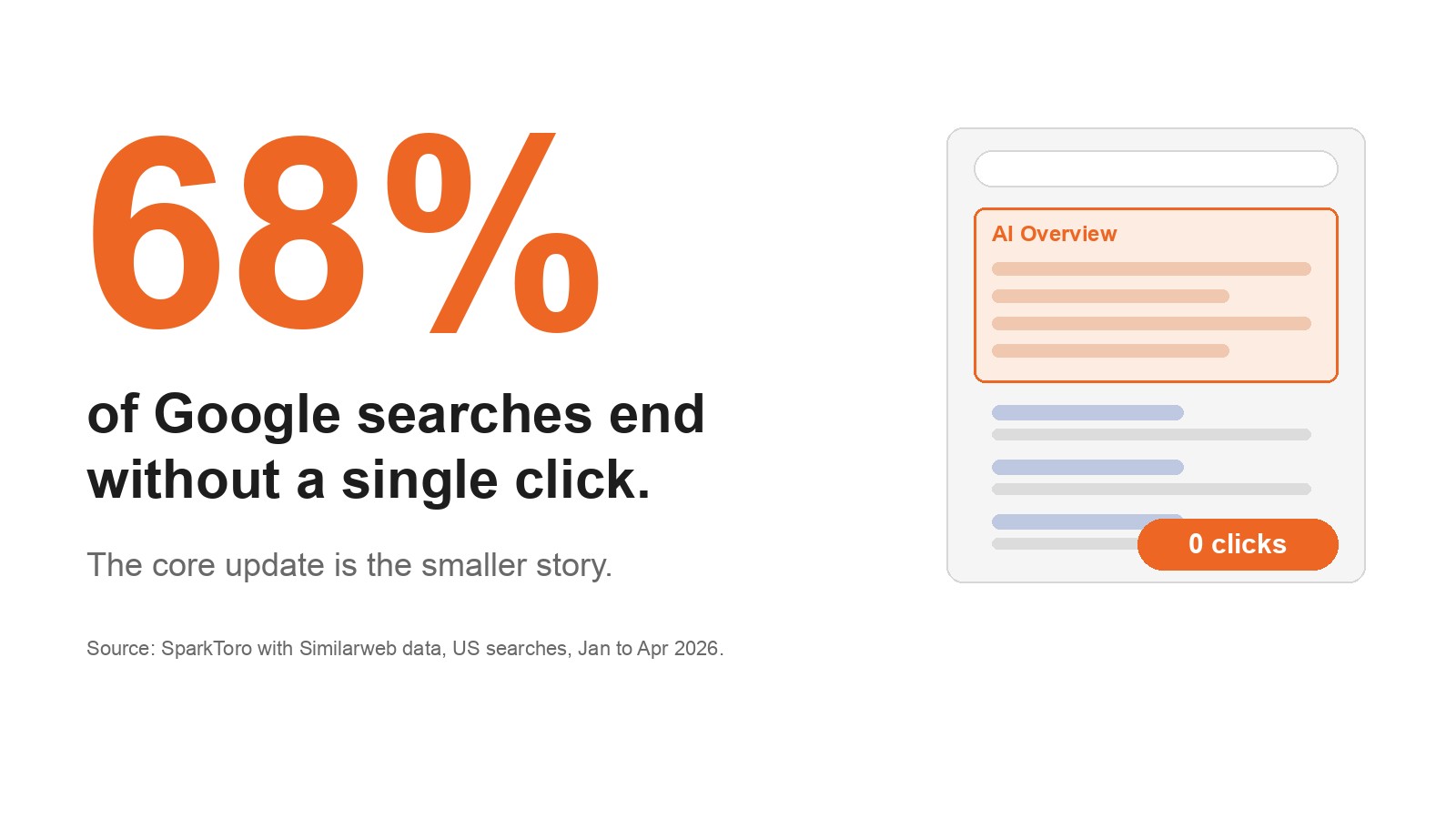
The clicks tell the same story. SparkToro, using Similarweb’s panel, found that 68% of US Google searches ended without a click in the first four months of 2026, up from about 60% in 2024. In the same analysis, searches with an AI Overview saw click-through rates fall by nearly 60%.
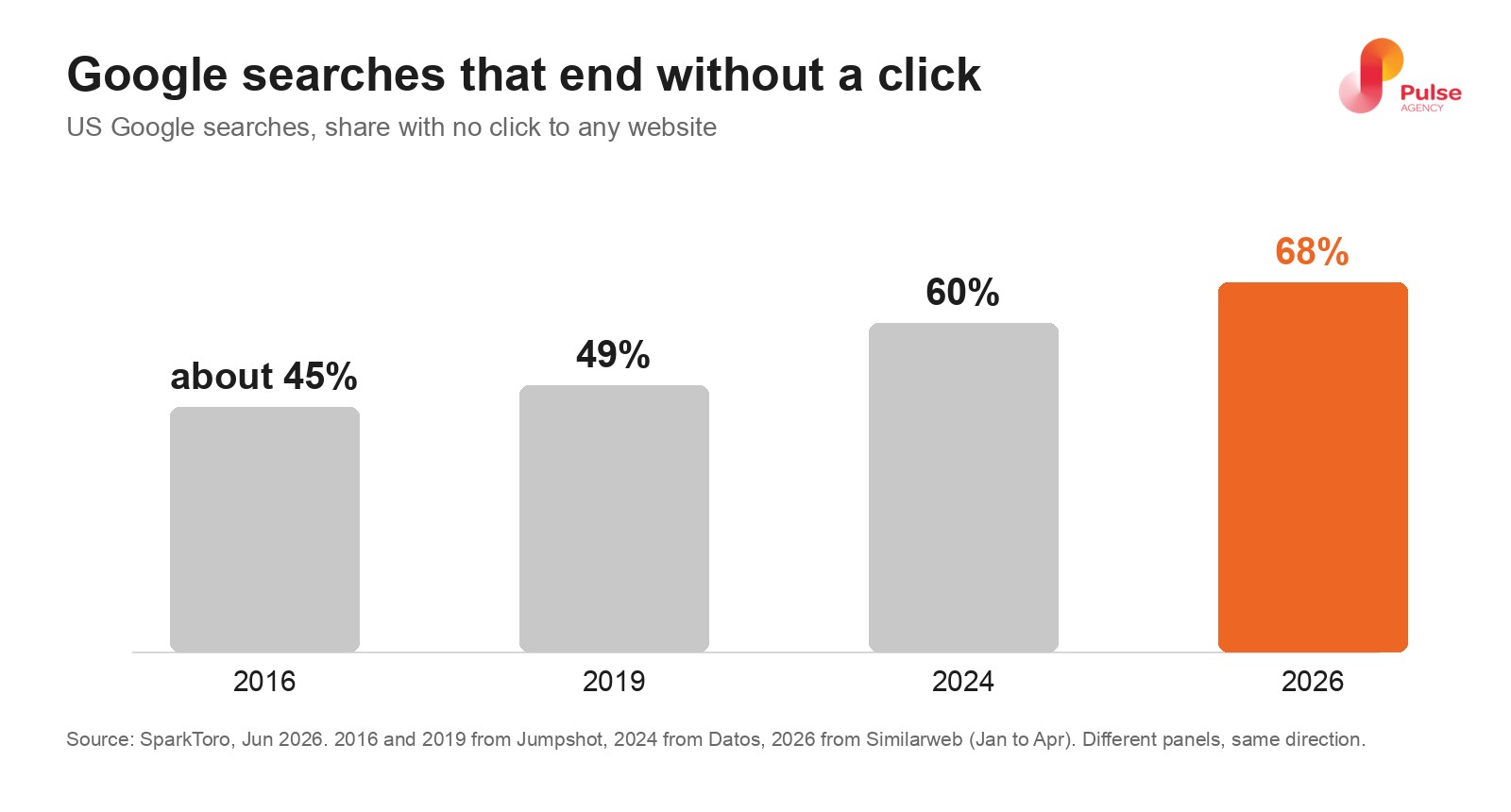
So if your traffic dips over the next few weeks, the core update might not be the reason. You might be ranking exactly where you were, with an AI answer now sitting on top of you.
Google sees it differently. In August 2025, Liz Reid, who heads Google Search, wrote that total organic clicks from Google to websites had stayed relatively stable year over year, and that the clicks are higher quality, meaning people are less likely to bounce straight back. Both things can be true at once: fewer searches end in a click, and the people who do click are further along. For a small business, it’s one more reason to judge December by enquiries, not traffic.
Zero-click marketing: be useful where people already are
Rand Fishkin, who co-founded Moz and now runs SparkToro, has a name for the response: zero-click marketing. The idea is simple and a bit uncomfortable for anyone who measures success in website visits. If platforms keep people on the platform, give them something useful right there, so they remember your name when they’re ready to buy.
Rand explains it in under five minutes on his own channel, including why zero-click doesn’t mean zero marketing:
If I ran a local service business, I’d stop treating every no-click search as a lost customer and do four things:
- A Google Business Profile with current hours, real photos and replies to reviews, because that’s what shows when someone searches your name or “near me”.
- Pages that answer one question clearly, in the first paragraph, so they’re easy to quote in an AI answer.
- Your business name and suburb on everything you publish, so being quoted still builds recognition.
- Useful posts on the platforms your customers actually use, not just links back to your site.
Sometimes the win isn’t the click. If an AI Overview quotes your answer on lease reviews and the searcher calls you two weeks later by typing your name, that sale started on a page they never clicked.
What to measure in December
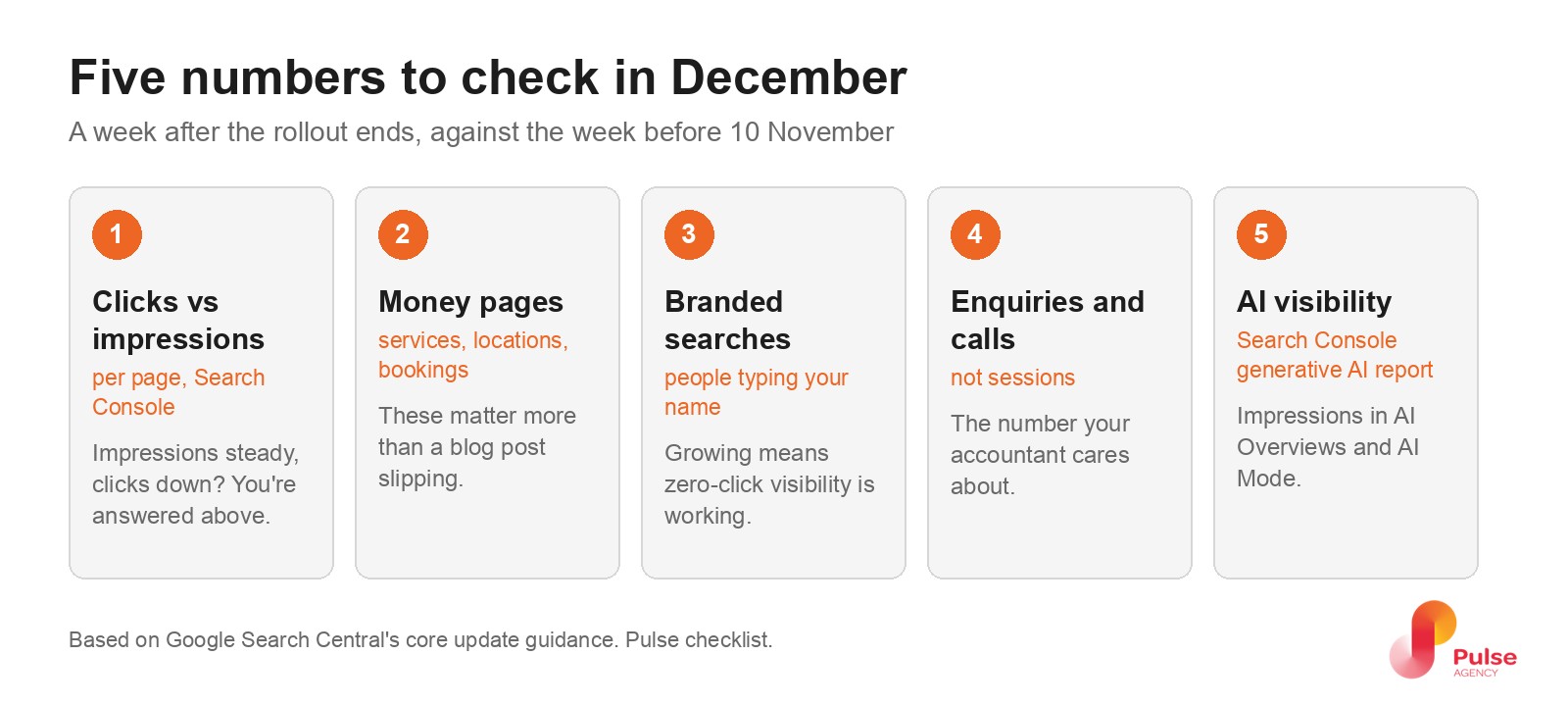
When the rollout is finished and a week has passed, I wouldn’t start with total traffic. I’d look at five numbers that show whether the business is actually worse off:
- Clicks and impressions per page in Search Console, a week after against a week before. Impressions holding while clicks fall usually means you’re still visible but answered above.
- Position on the pages that make money: services, locations, booking pages. A blog post slipping matters less than your main service page.
- Branded searches: people searching your business name. If those grow, zero-click visibility is working.
- Enquiries, calls and bookings, not sessions. That’s the number your accountant cares about.
- AI visibility: Search Console’s generative AI performance report shows impressions in AI Overviews and AI Mode for your pages.
One trap no update guide mentions: for Australian businesses, the first proper analysis window lands in December, right in the Christmas rush. A gift shop or a tradie booked out before the holidays will see numbers move for reasons that have nothing to do with Google. So also compare with the same week last year, and look at whether your competitors moved too.
If pulling that together every month sounds like a chore, it’s exactly what a marketing dashboard is for: one screen with enquiries next to rankings, so an update becomes a line on a chart instead of a panic.
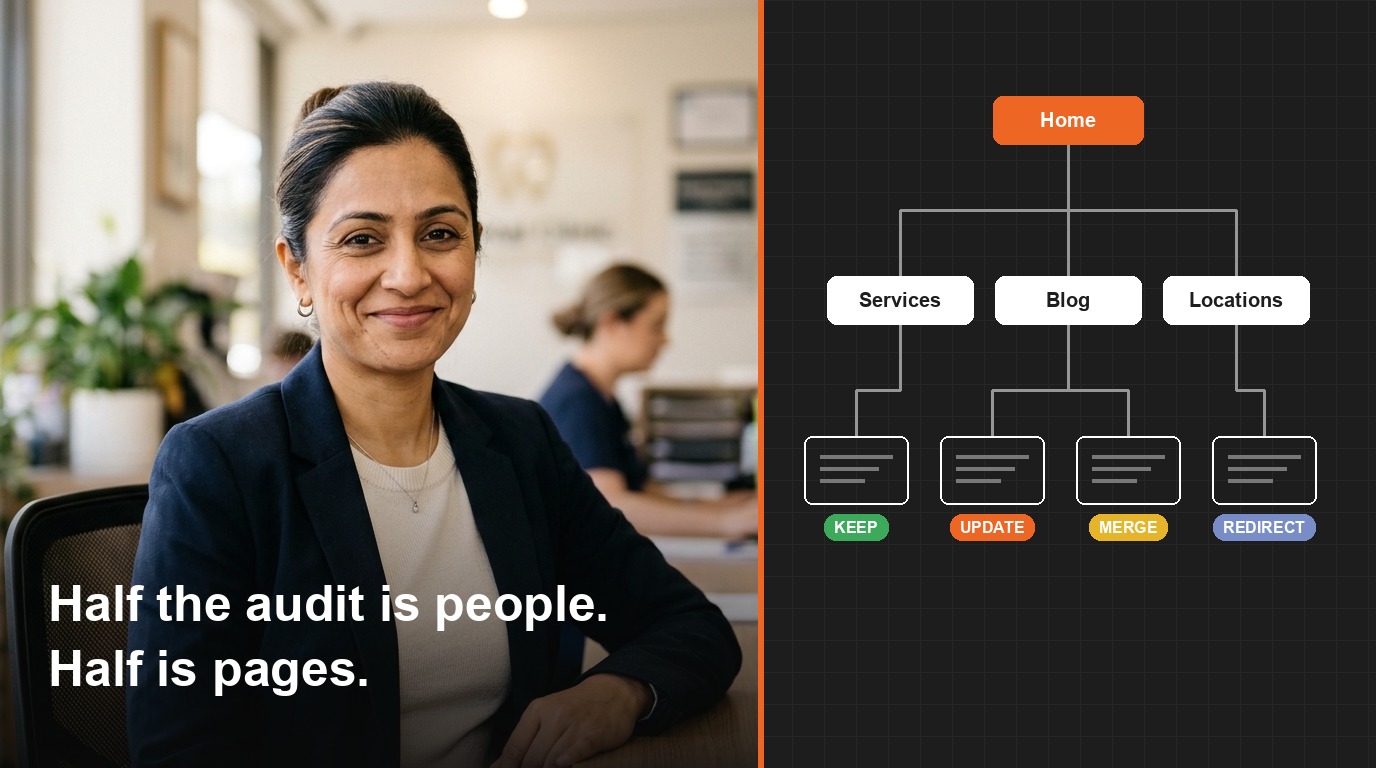
If the drop is big and sustained on pages that matter, I’d audit the pages that make money first, with one question: does this page still deserve to rank? My content audit method gives every page a decision, and it’s where our SEO work starts too.
So, for the next two weeks: note the date, keep selling, and leave the website alone. Then measure in December, with the right comparison. If you’d like someone to read the numbers with you when the dust settles, get in touch.
FAQ
What is a Google core update?
A core update is a broad change to how Google’s ranking systems assess content across the whole web, not a penalty aimed at specific sites. Google releases several a year and announces them on its Search Status Dashboard. Rankings can move up or down while it rolls out, usually over one to two weeks.
How long does the November 2026 core update take?
Google started rolling it out on 10 November 2026 and said it may take up to two weeks to complete. Google recommends waiting at least a full week after a core update finishes before analysing your site, then comparing a week after the update with a week before it started.
My rankings dropped during the update. What should I do?
Wait until the rollout finishes and a week has passed, then compare like with like in Search Console, and check the Manual Actions report to rule out a penalty. Small drops, like position 2 to 4, need no drastic action. For large drops, improve the pages honestly and expect recovery to take months, often until the next core update.
What is a zero-click search?
A zero-click search is one that ends without the searcher clicking through to any website, because the answer was on the results page. SparkToro found 68% of US Google searches ended without a click in early 2026. Zero-click marketing means being useful and memorable on the page itself.
Do AI Overviews reduce clicks to my website?
Often, at the level of a single search. SparkToro reports that click-through rates fall by nearly 60% when an AI Overview appears, and Semrush data shows AI Overviews on more than 80% of US searches. You can still be quoted in the overview, which builds recognition even when nobody clicks.