

SEO for law firms: why I’d out-specialise the big firms, not try to outspend them
A small firm can't outspend the big end of town on 'lawyers Sydney'. It can out-specialise them, one client problem at a time.
Most boutique law firms are fighting the wrong SEO battle. The usual belief is that ranking for “[practice area] lawyers + city” is what makes the phone ring. That belief costs small firms a fortune, and it’s the first thing I’d change.
The big firms aren’t cheating to sit at the top of that search. They’ve spent decades building names, links and huge websites. That’s their home ground, and they earned it.
You win somewhere else entirely: by having the most useful page on Google for each specific worry your clients type in, in the words they actually use. By the end, you’ll know why that works, where it hurts and what I’d do first.
Ranking for “lawyers Sydney” is the wrong fight for a small practice
The advice everyone hears is simple: rank for “employment lawyers Sydney” and the work will follow. SEO people love a keyword that sounds important, and I’m not immune either.
But look at who you’re up against. The firms on page one have years of links from other websites, enormous sites and budgets that make yours look like petty cash. You’re not losing because you’re doing something wrong. You’re losing a contest of size.
Paid ads don’t dodge the problem. They just put a price tag on it. CPC (cost per click) is what you pay Google each time someone clicks your ad.
In 2012, a single click for “employment lawyers Sydney” could cost around $20 — Pulse Agency case study, 2012
That’s twenty dollars every time someone clicks, whether it’s a future client, a law student or a rival partner having a sticky. It’s an old number, and I wouldn’t assume it has got cheaper. If you’re weighing up the trade-off between SEO and paid ads, that click price is where the conversation should start.
Think of a big hospital and a knee specialist. The hospital has everything under one roof. But when your knee goes, you look for the person who fixes knees all day. A boutique firm is the knee specialist, so it shouldn’t try to be the hospital.

Your clients don’t search for your practice area. They search for their problem
Most legal websites are organised the way lawyers think, not the way clients worry.
Someone who’s just lost their job often doesn’t know which legal category applies. They aren’t typing “employment law services”. They’re typing about being let go from a restaurant job, a contract that feels off, or a boss holding back their pay.
In practice, the difference looks like this. These are illustrative headings, not legal guidance.
Don’t do this: a services page called “Employment Law Services: Unfair Dismissal, Workplace Disputes, Contract Review”.
Do this: a page called “Let go from a restaurant job with no warning? Questions to ask before you sign anything”, or “My employer is holding back my wages: what are my options?”
The first heading is accurate. The second is what someone types at 11pm, still in their work apron. How many of your last ten new clients knew which practice area their issue fell under before they rang you?
More blog posts won’t save you. A connected hub of legal content will
The usual fix is “post more blogs”. I’d push back on that, because a pile of disconnected posts doesn’t add up to much.
What does add up is a topical hub. That’s a few broad centre pages surrounded by many specific ones, all linked together. In the employment example, the centre covered unfair dismissal, employment contracts and workplace disputes. Around them sat practical situations, like dismissal in the restaurant industry, executive termination and performance management disputes.
Picture Central Station. The broad topic page is Central, and each specific page is a stop on one of the lines. Internal links, meaning links from one page on your site to a related page on your site, are the tracks. A reader, and Google, can travel from any stop to any other without getting lost.
Two other pieces matter, but they’re support acts. Technical SEO is the plumbing that lets Google find, load and understand your pages. Your Google Business Profile is the shopfront in local results, so keep it complete and pointing to the right pages.
One plain rule: every page must be accurate, and a lawyer at the firm should review it before it goes live.

The small firm that stopped chasing the big keyword, and got it anyway
This isn’t theory. In January 2010, JFM & Co, a boutique Sydney employment law firm, came to us. They were up against some of the largest practices in the city. They’d already spent thousands on PPC and SEO, and their rankings were still very low.
We started with what people actually search for, not the firm’s list of services. Then we built the employment law hub described above, backed by solid technical work. The results, over the campaign:
+270% website visitors and +38% leads — Pulse Agency case study, 2010–2012
Page one for “employment lawyers Sydney”, #1 for “employment contracts lawyer sydney” and “underpayment of wages lawyer sydney”, 100+ keywords ranked, and NSW visitors up from a few hundred a month to 1,000+ — Pulse Agency case study, historical rankings report
Roughly tripling local visitors is easy to picture. For leads, take a hypothetical (not the firm’s real numbers): if you get ten enquiries a month, a 38% lift means nearly four more.
The irony is the part I love. They reached page one for the very term they’d stopped chasing directly. The hub is what got them there. Google saw a site that covered every corner of the topic.
Now the honest caveat. That campaign is more than a decade old, and Google has changed a lot since. If anything, the principle matters more now, because people increasingly type, or ask AI tools, whole questions. That’s a hunch, not a finding.
The full story is in the JFM & Co case study. We’ve applied the same specialist thinking with Chapman Solicitors, a strata and property practice, and it’s how I approach marketing for law firms generally.
Yes, it’s slower, and most pages bring a trickle. I’d still do it
Here’s the catch. This approach is slower, and I won’t pretend otherwise.
Each specific page brings modest traffic on its own. Building a hub takes sustained effort, and it won’t fill your diary next week. The results above came over a campaign of more than two years, and I wouldn’t promise anyone a faster timeline.
So why do I still back it? A trickle of the right people beats a flood of the wrong ones. Someone searching “underpayment of wages lawyer sydney” is describing a situation they’re in right now. They’re far closer to calling than someone browsing “lawyers Sydney”.
Where could I be wrong? If you need enquiries this month, a hub won’t deliver them. In that case, I’d run tightly targeted ads to bridge the gap. Ads are a useful tool, just an expensive one on generic searches.
Forget the keyword list. Start with your intake notes
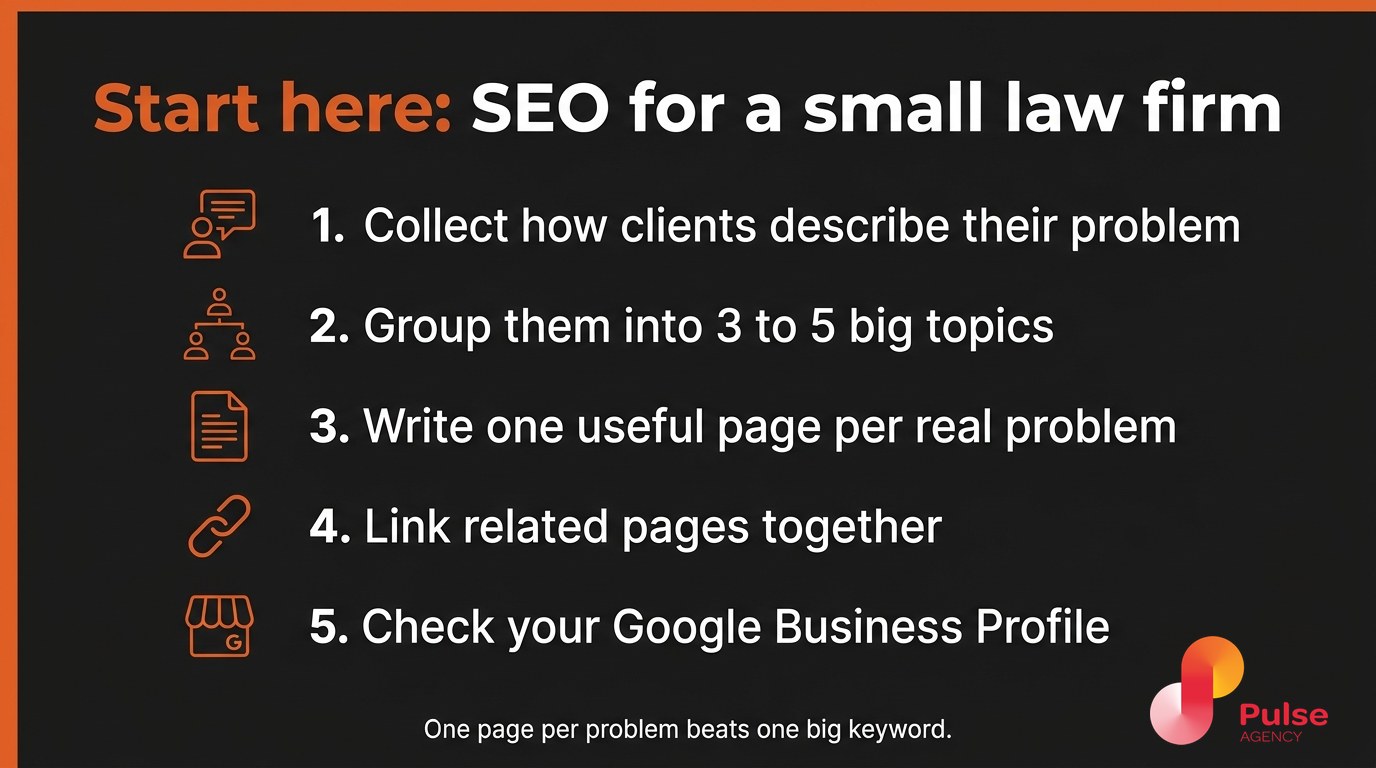
You don’t need a big-firm budget to begin. Where I’d start this week:
- Pull your last 20 or so enquiries and write down how each client described their situation, in their words.
- Group them into three to five broad topics. Those become your centre pages.
- Pick the five most common worries for the work you actually want, and write one genuinely useful page for each. Have a lawyer review it.
- Link each new page to its centre page and to related pages.
- Check your Google Business Profile is complete, and make sure Google can find and load the new pages. If that last bit sounds like plumbing you’d rather not touch, that’s what our SEO services are for.
So, one question for every partner reading this. If your five best clients rang tomorrow, what would they describe, in their words, not yours? And does your website have a page for each one? If you’re not sure, I’m happy to have a look with you.
Frequently Asked Questions
Does SEO work for small law firms?
Yes, as long as you stop competing on generic terms the big firms already own. A boutique Sydney employment practice we worked with reached page one for “employment lawyers Sydney” after we built a problem-based content hub.
How long does SEO take for a law practice?
It depends on how competitive your area is, how much useful content you already have and how consistently you add to it. It’s slower than ads, and each page brings modest traffic until the connected pages build up.
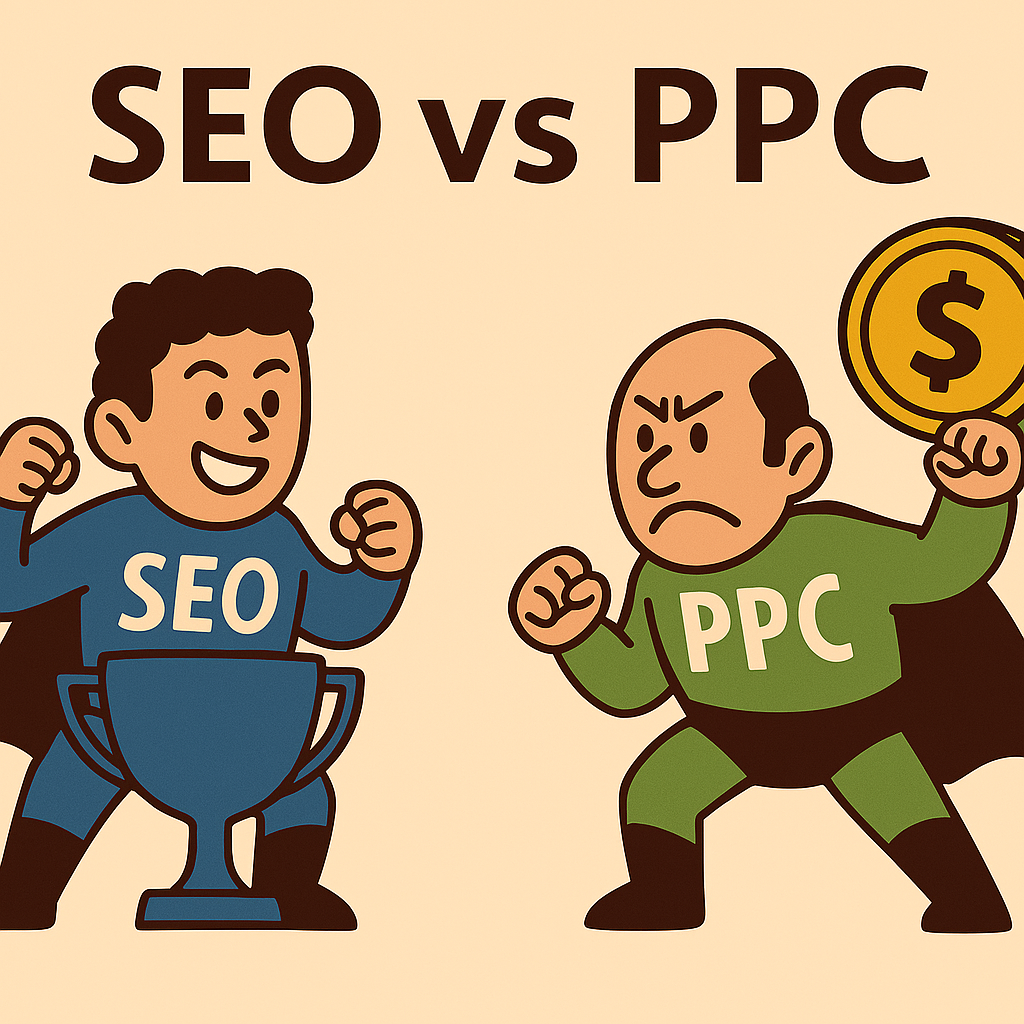
Is SEO or Google Ads better for lawyers?
They do different jobs. Ads bring enquiries quickly but get expensive on generic terms. Content built around clients’ real situations is slower but keeps working, so many small firms use ads to bridge the gap.