ChatGPT ads are here. Claim the free profile before you buy one
ChatGPT now shows ads in Australia and lets businesses claim a profile. It's Google's playbook again, and the first move is free.
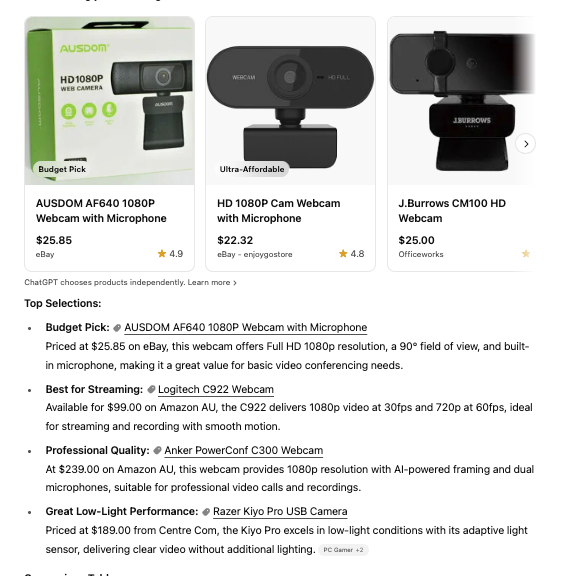
I owe Google a small apology. In May 2025 I tested ChatGPT against Google to find a cheap webcam, and ChatGPT won on one thing: no ads, no listicles, no noise. I called Google “Yahoo 2.0”. It felt like the clean alternative.
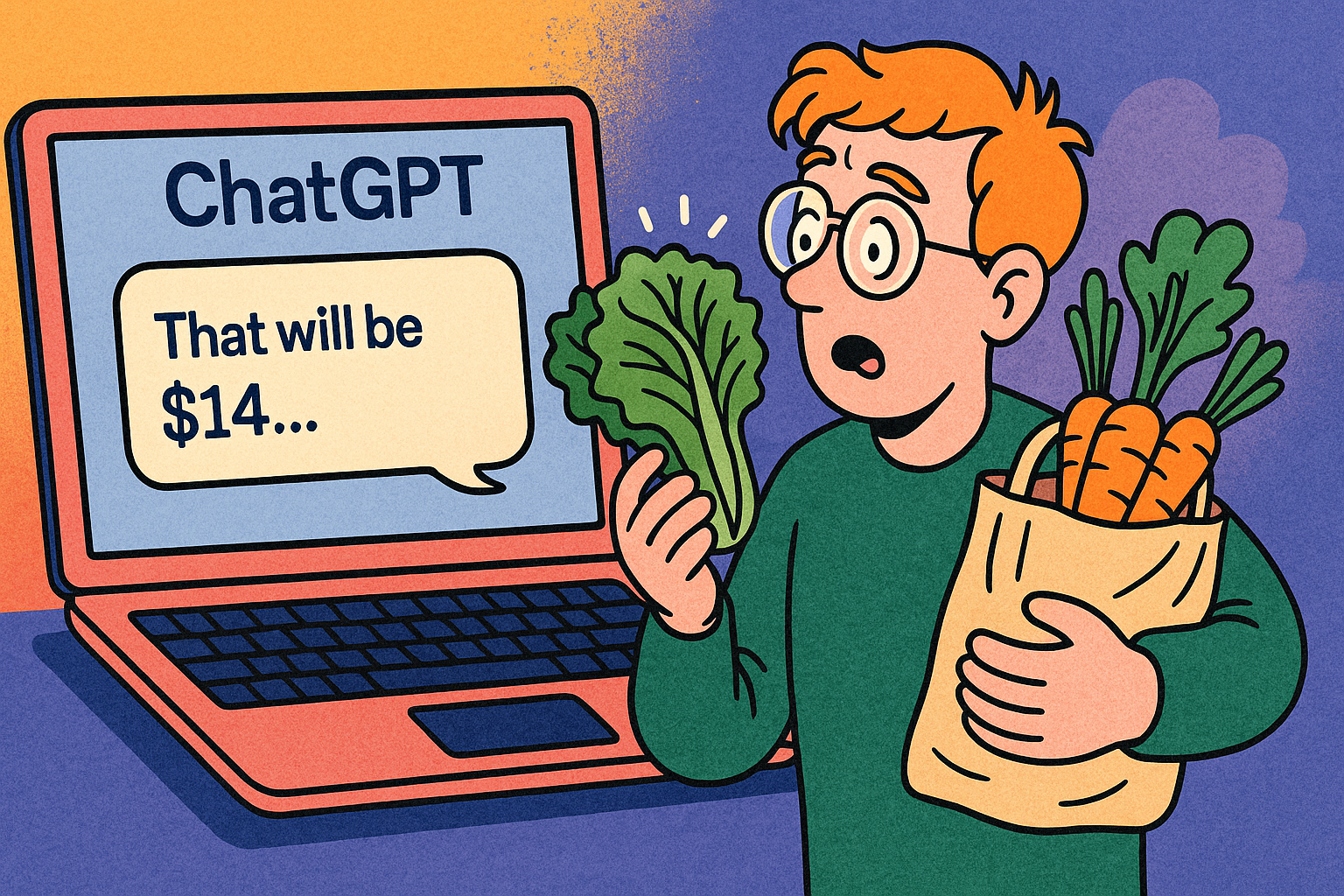
Eighteen months later, ChatGPT ads are live in Australia, ranked partly on what advertisers bid. And since 10 November 2026, businesses can claim a profile inside ChatGPT, get a blue tick and see how often they’re mentioned. Free answers first, then ads beside them, then business listings. If you’ve run a small business through 25 years of Google, you’ve seen this film.
That’s not a scandal. It’s a business model, and it tells you what to do next. The difference this time is that you’re early, and the first move costs nothing.
What changed since my webcam test
Two things, nine months apart.
ChatGPT ads. OpenAI started testing ads in the US on 9 February 2026 and extended the pilot to Australia, Canada and New Zealand from late March (Mediaweek, March 2026). According to OpenAI’s Help Center, ads appear only on the Free and Go plans, as one labelled unit below a response. Plus, Pro, Business, Enterprise and Edu accounts don’t see them, and neither do under-18s or conversations about sensitive topics like health. When several ads qualify, OpenAI weighs relevance and advertiser bids. If you’ve ever run Google Ads, that sentence should sound familiar.
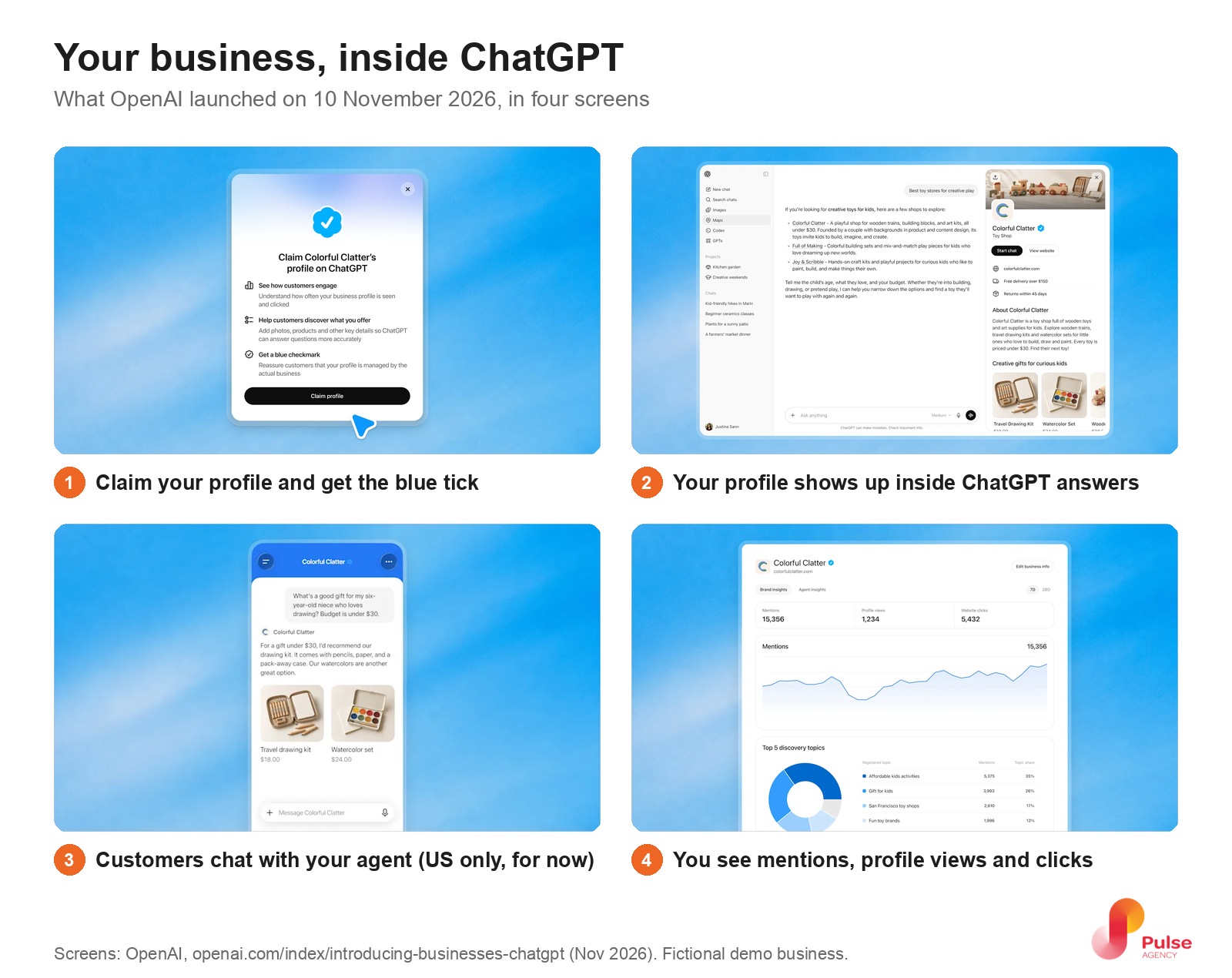
Businesses in ChatGPT. On 10 November 2026 OpenAI launched Businesses in ChatGPT in beta. Through Business Hub, an owner can claim and verify a business, update its details, add product feeds with prices, and see aggregated insights: mentions, website clicks and the topics people were discussing when the business came up. OpenAI says it doesn’t share anyone’s conversations with the business. OpenAI’s own 49-second video shows it in action:
People here have noticed. Searches for “chatgpt ads” in Australia went from 390 in November 2025 to 2,900 in October 2026, an average of 1,900 a month over the year (Google Ads keyword data via DataForSEO, Australia, November 2026).
Google’s playbook, step by step
Google launched in 1998 as a clean page of free answers. AdWords arrived in October 2000: small text ads beside the results. Then came the business listing, which went through a few names before it became Google Business Profile in November 2021. Then the ads and the listing started working together, so an ad could show your address, reviews and hours straight from your profile.
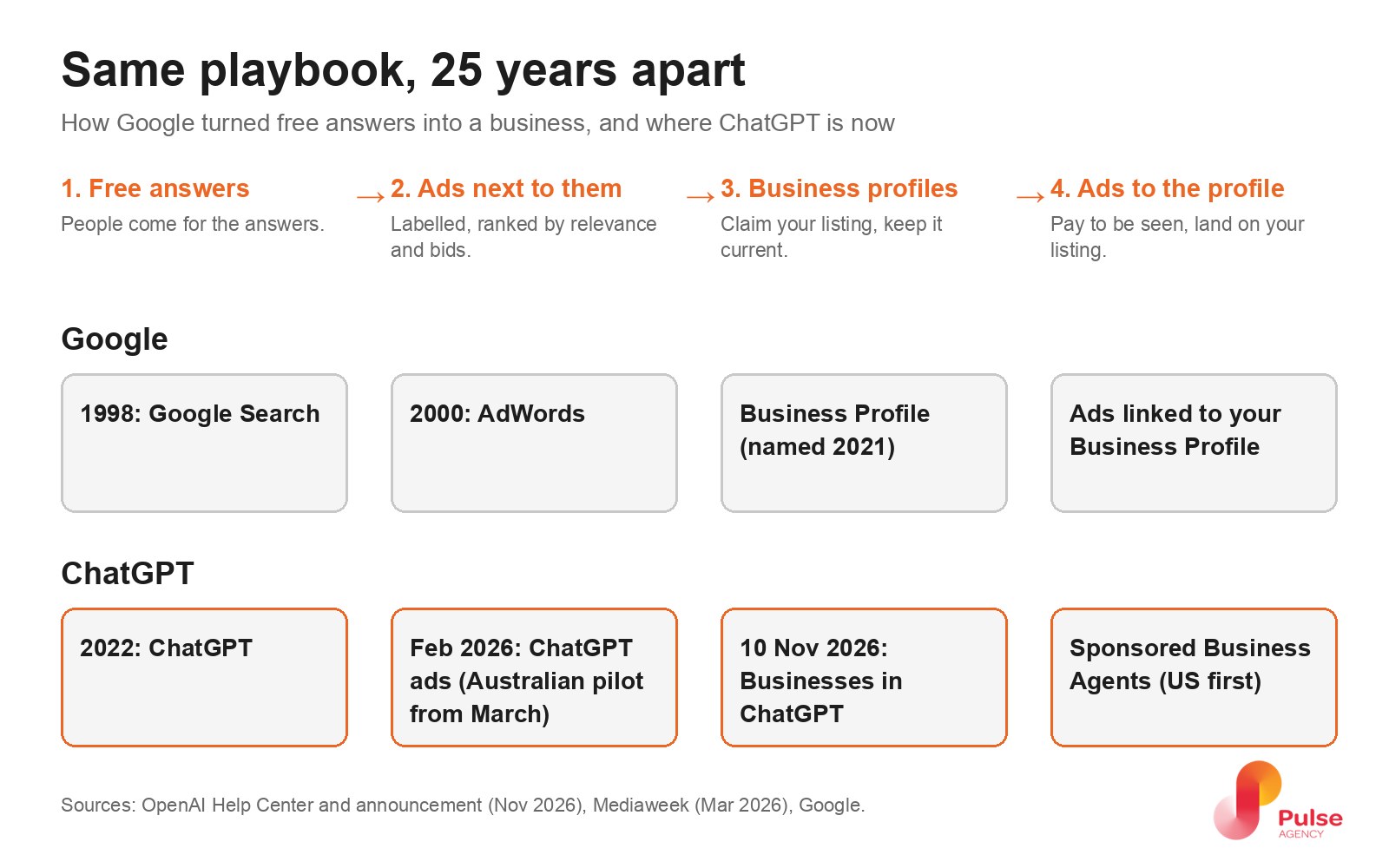
Put ChatGPT next to it. Free answers from November 2022. Ads in 2026. Business profiles in November 2026. And the fourth step has already started: OpenAI says businesses can sponsor their Business Agent (a chat assistant that answers questions about the business) and use it as the destination for ChatGPT ads. For now that’s only for eligible US ecommerce and online service businesses. Ad, profile, conversation, all in one place.
Think of a shopping centre. Year one, the doors open and people wander in for free. Year two, the good spots near the escalators get rented. Year three, every shop gets a sign in the directory, and the directory starts selling the top line. Google took more than two decades to build that centre. OpenAI has put up the signs and the directory within a single year.
For a business owner, the speed is the point. On Google, a free listing with accurate hours, photos and reviews became a serious asset for local businesses, and it took years for many of them to bother. In ChatGPT the same free step is open now, while most of your competitors haven’t heard of it.
Claude went the other way
Not every AI company is taking this road. In February 2026 Anthropic wrote that Claude will remain ad-free: no sponsored links next to conversations, and no advertiser influence on the answers. Its argument is that people tell an AI assistant far more than they type into a search box, and an assistant with something to sell has a reason to steer. Anthropic earns its money from subscriptions and business contracts instead.
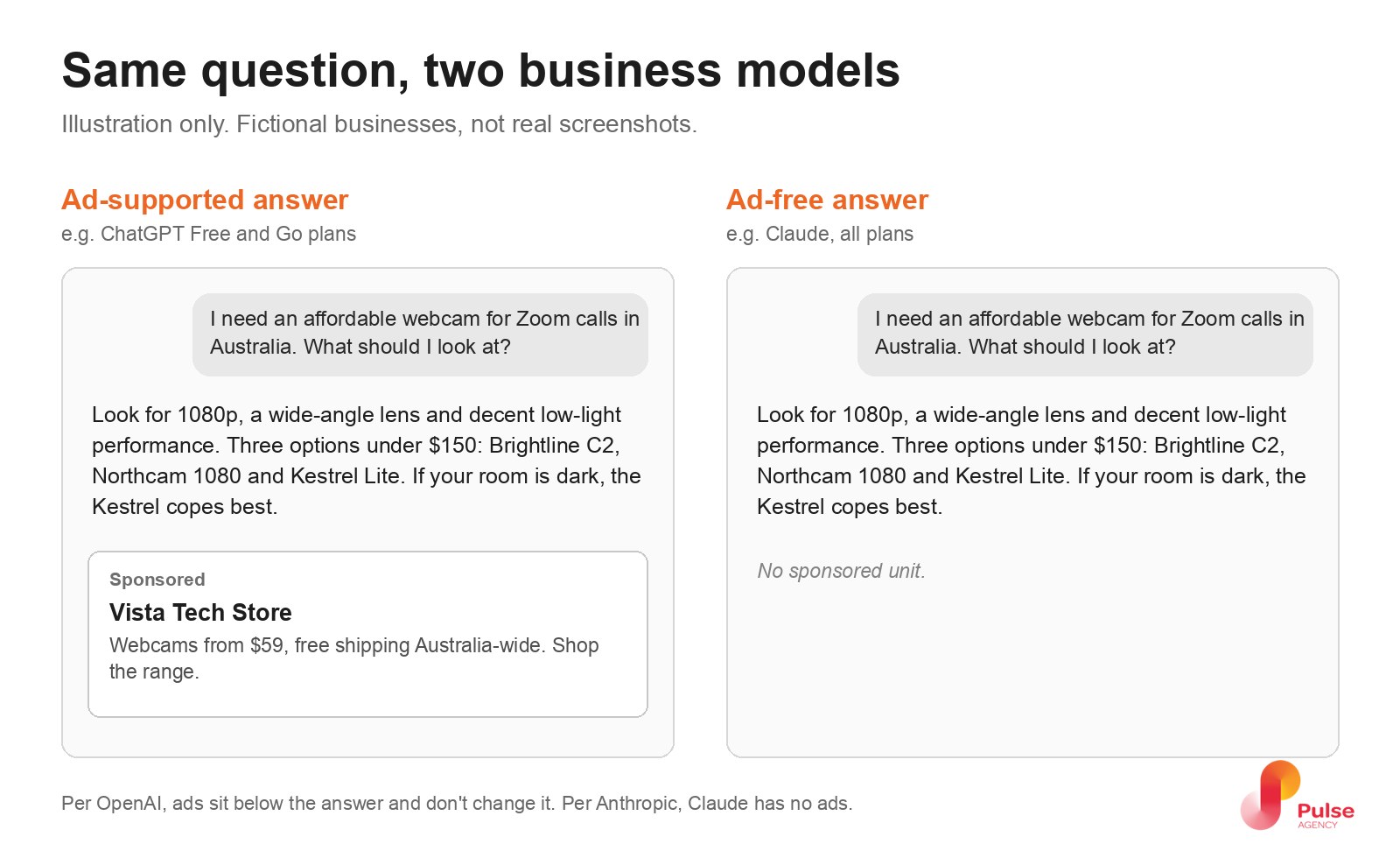
OpenAI’s side of the argument is fair too. OpenAI says ChatGPT has 1.2 billion weekly users, and most of them don’t pay. Its position is that ads help fund free access, while answers stay independent and ads stay labelled and separate. Anthropic’s own post says other AI companies “might reasonably reach different conclusions”. Both are bets on what users will put up with.
For you, the takeaway is practical. There are now two kinds of AI visibility. One you can pay for: a sponsored unit under a ChatGPT answer. The other you can only earn: being named in the answer itself, in ChatGPT, in Claude, in Google’s AI Overviews. The second one is where most of the trust sits, and no one is selling it. Yet.
What to do this month (it takes an afternoon)
Start with the free part. Ads can wait until you have data.
- Ask ChatGPT about yourself first. “What does [your business] in [your suburb] do, and when is it open?” Note what it gets wrong: hours, services, an old address. That’s your to-do list.
- Claim your business in ChatGPT. It’s open to any eligible business located where ChatGPT is available, which includes Australia. Verification confirms you actually run the business. Once verified, your profile gets a blue tick.
- Copy your details from Google Business Profile, exactly. Same business name, address, phone, hours and service names. AI tools pull from many sources, and a business that describes itself the same way everywhere is easier to get right.
- Read the insights after a few weeks. Business Hub shows mentions, website clicks and discovery topics, the themes of the conversations where your website was cited. Treat the topics like a keyword list: they show the questions people bring to ChatGPT before they find you. My keyword research method with ChatGPT and Google Sheets works just as well on that list.
- Keep earning mentions. Reviews, local media, industry associations, a clear page for each service. That’s the public evidence that gives any AI something solid to say about you, paid or not.
- Test ads only if they fit. If you sell online and already get a return from Google, a small ChatGPT test can tell you something. If you’re a local service business on a tight budget, your next dollar still does more on Google, where people search with a suburb and a problem.
The answer still isn’t for sale
Here’s the part I’d build on. According to OpenAI, ads in ChatGPT don’t change the answer. Claude has no ads at all. So the most valuable spot, being the business the AI actually recommends, is earned the same way a good Google ranking is: a website that says clearly what you do and where, pages that answer real questions, reviews from real customers, and details that match everywhere.
That’s why I don’t see ChatGPT ads as a reason to move money away from SEO. It’s the same logic as SEO vs PPC: paid buys you a spot today, earned keeps working when you stop paying. And if you already run Google Ads, most of what you know transfers: relevance matters, bids still matter, and the page people land on decides whether the click was worth it.
The webcam test still holds, by the way. ChatGPT’s answer was useful because nobody had paid to be in it. That’s worth protecting, as a user and as a business.
So, the decision for this week. Have you claimed your business in ChatGPT, and does it describe you the way your Google profile does? If you’d like a hand checking how AI tools describe your business, get in touch.
FAQ
Are there ads in ChatGPT in Australia?
Yes. OpenAI extended its ChatGPT ads pilot to Australia, Canada and New Zealand from late March 2026. Ads appear only for users on the Free and Go plans, as one labelled unit below a response. Plus, Pro, Business, Enterprise and Edu accounts are ad-free, and ads don’t show to under-18s or next to sensitive topics like health.
How do I claim my business on ChatGPT?
Through OpenAI’s Business Hub, launched in beta on 10 November 2026. Any eligible business located where ChatGPT is available can claim its profile. Verification confirms you run the business. Once verified, you can update details, add products and see how often ChatGPT mentions you.
Do ChatGPT ads change the answers?
OpenAI says no. According to its Help Center, ads run on separate systems from the chat model, are clearly labelled, and advertisers can’t shape or rank ChatGPT’s responses. When several ads qualify, OpenAI weighs relevance and advertiser bids to choose which one appears below the answer. Advertisers only receive aggregated data such as views and clicks.
Does Claude have ads?
No. In February 2026 Anthropic committed to keeping Claude ad-free: no sponsored links next to conversations and no advertiser influence on its answers. Anthropic earns its money from paid subscriptions and business contracts instead. For businesses, that means the only way to appear in a Claude answer is to be a good, well-described answer.
Should a small business advertise on ChatGPT?
Not first. Claim your free ChatGPT business profile, keep your details consistent with your Google Business Profile, and read the insights for a few weeks. If you sell online and Google already works for you, a small test can make sense. Local service businesses on tight budgets usually get more from Google Ads and SEO.