
NDIS advertising in 2026: the new rules, and what to do instead
Three changes tighten NDIS advertising in 2026: the inducement ban from 20 November, the ACCC's crackdown on "NDIS approved" and the Commission's anti-promotion orders. Eight tactics to stop, and what works instead.
If your NDIS advertising promises a sign-up gift or a referral voucher, review it before 20 November 2026. Below are eight tactics I’d replace this week, starting with how to keep referrals coming without paying for them. Look up “NDIS marketing strategies” and most lists still recommend referral programs with rewards; they’re out of date.
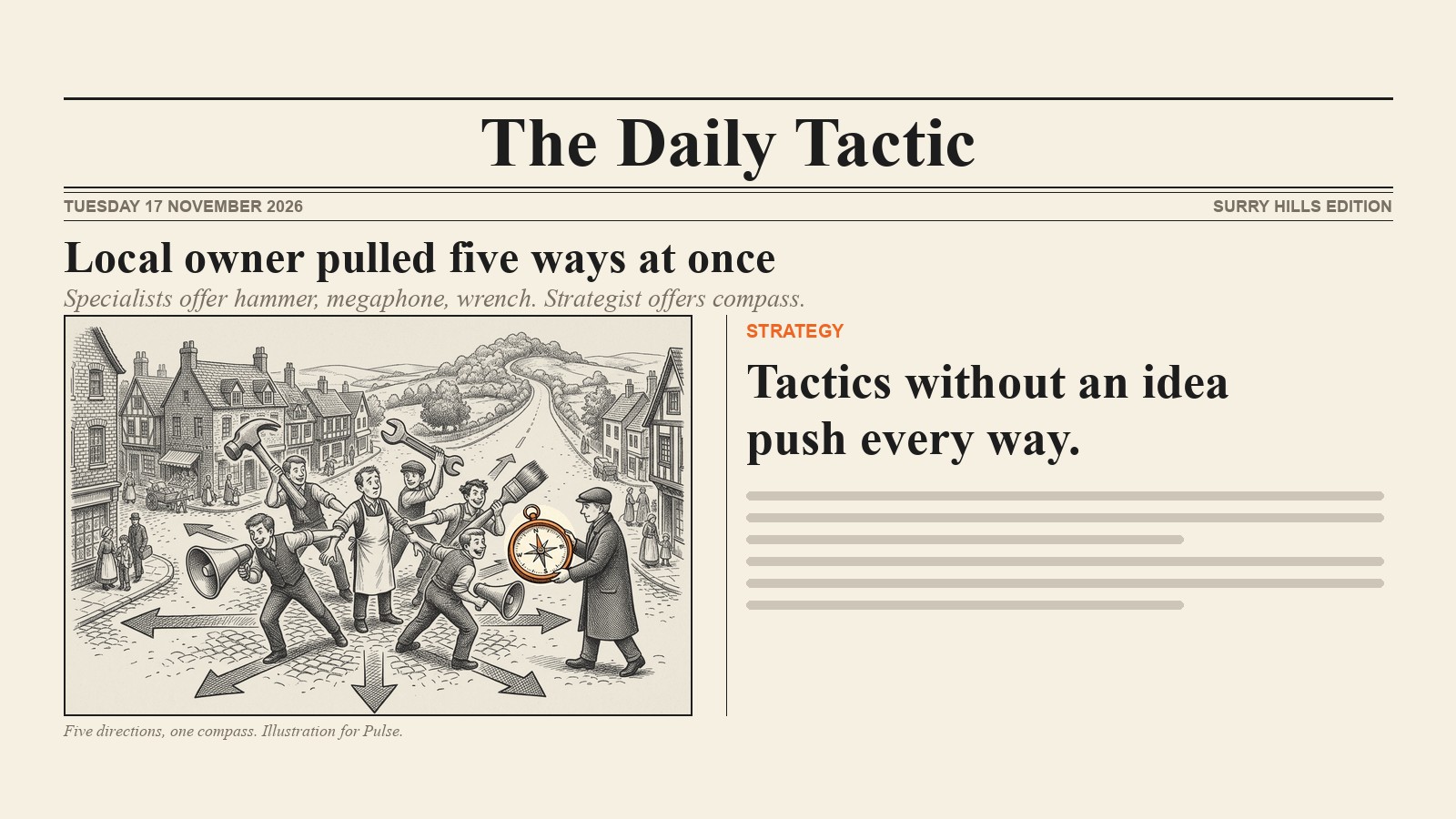
The reason is that NDIS advertising is being tightened from three sides this year: a new ban on inducements, ACCC penalties for “NDIS approved” claims, and new powers for the NDIS Commission to restrict promotions. Most of what they catch is marketing: ads, landing pages, referral programs, social media competitions and thank-you gifts. The short version: providers grow by being easy to choose, not by sweetening the deal. (We’re a marketing agency, so treat this as marketing advice, not legal advice. Sources checked on 19 November 2026.)
The three changes to NDIS advertising in 2026
1. Inducements become an offence from 20 November 2026
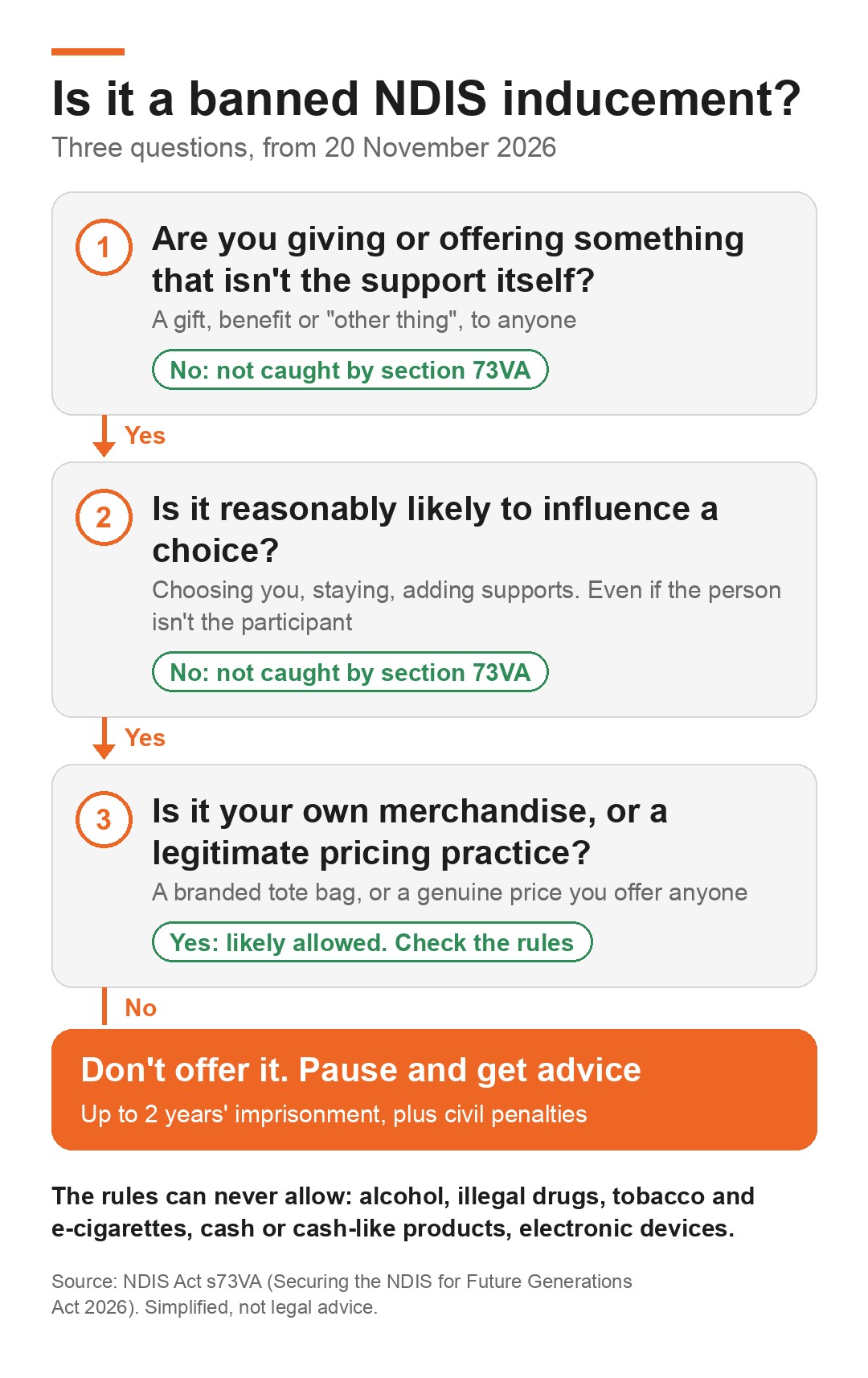
Section 73VA of the NDIS Act, added by the Securing the NDIS for Future Generations Act 2026, stops NDIS providers from giving or offering a gift or benefit that’s reasonably likely to influence someone to choose them, stay with them, add or increase supports, or have them manage plan funding. It applies whoever receives it: “it does not matter whether the person is the participant”, so families, support coordinators and other referrers are covered. Your own branded merchandise and legitimate pricing are allowed; alcohol, cash or cash-like products and electronic devices can never be. Item 9B of the Act’s commencement table starts it on 20 November 2026, even though the Department’s reform timeline says 27 November.
2. The ACCC is going after “NDIS approved”
This one is existing consumer law, enforced harder. In its February 2026 report on the NDIS, the ACCC says false or misleading advertising makes up the largest share of complaints it receives about NDIS providers. The NDIS doesn’t approve or accredit products or services, so claims like “NDIS approved” or “100% NDIS funded” mislead when funding depends on a participant’s plan. Thermomix and Bedshed paid penalties after the ACCC issued infringement notices over NDIS endorsement claims, and the ACCC says it’s investigating other businesses.
3. The NDIS Commission gets powers to restrict promotions
The NDIS Amendment (Integrity and Safeguarding) Act, passed by Parliament in April 2026, gives the NDIS Commission anti-promotion orders: it can restrict a person from promotion, advertising or marketing of the kind the NDIS rules prescribe. The government’s examples include holiday ads implying “paid by NDIS” and exaggerated returns on disability housing, though those are examples, not a list of banned categories. Breaching an order carries a civil penalty of up to 250 penalty units. We couldn’t find any orders or prescribing rules published yet, but the power is there.
Eight NDIS advertising tactics to stop, and what to do instead
1. Referral rewards
Stop: “Refer a friend and get a $50 voucher”, or a gift card for every participant a coordinator sends you.
Instead: make referring effortless. A referral page with a short form, a direct number that someone answers, and a reply within one business day. Then let the referrer know what happened, with the participant’s consent. Give coordinators what they need to help someone choose: your current capacity, your service area and a named contact who replies within one business day.
2. Sign-up gifts in ads and landing pages
Stop: “Free tablet when you join”, “bonus gift for new participants”, “win a $200 voucher”.
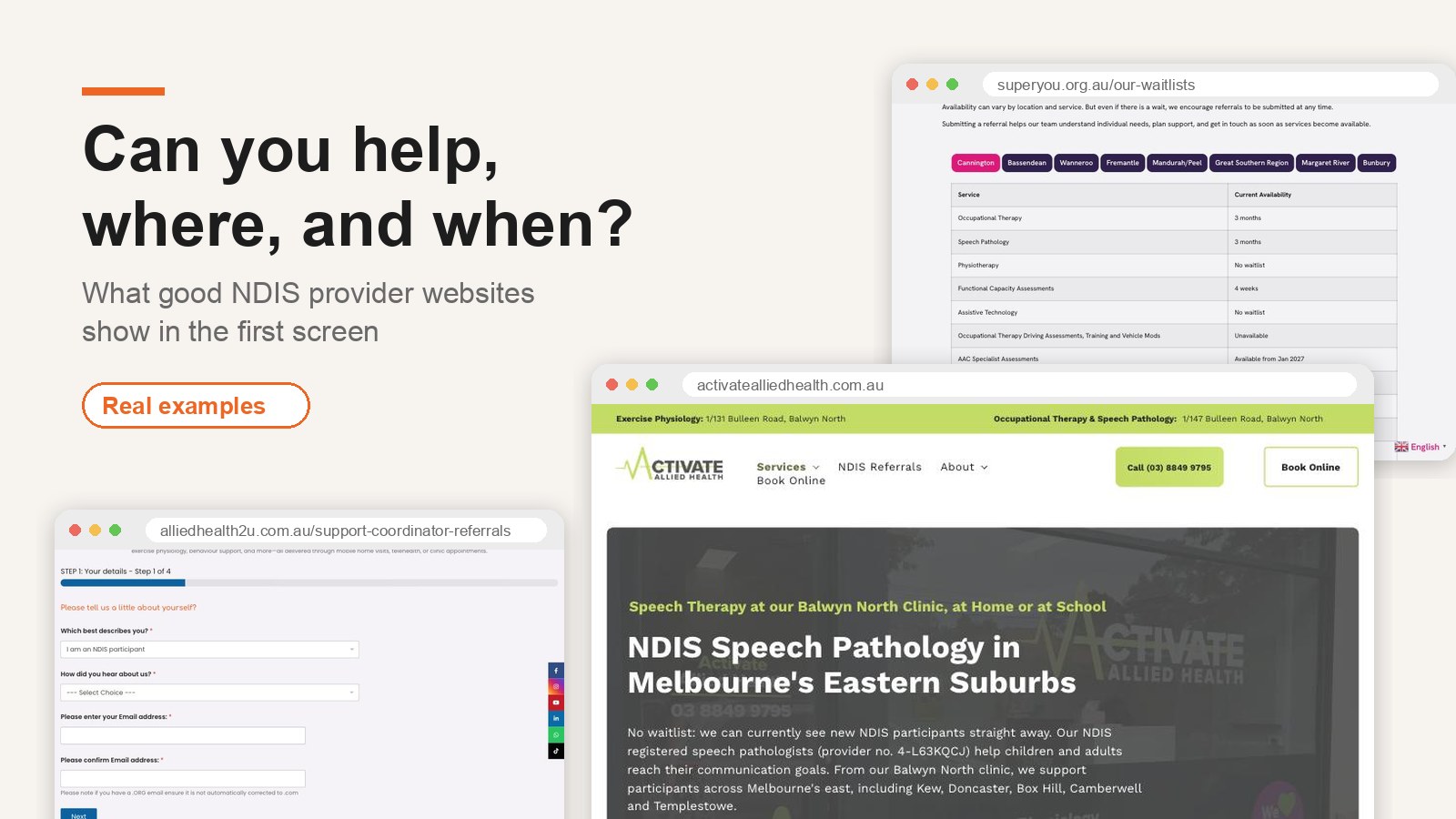
Instead: ads that answer the questions people actually have: which support, which suburbs, whether you have capacity now, and how to start. In Google Ads, that means campaigns split by service and area, so a search for physio in Parramatta sees a physio ad for Parramatta, not a generic “we do everything” offer.
3. Thank-you gifts to support coordinators and plan managers
Stop: hampers with wine, gift cards or gadgets for the people who send you clients. Alcohol, cash-like products and electronic devices can never be permitted under the new rules.
Instead: give coordinators what helps them do their job. A one-page summary of your services and areas, a short monthly email with your current capacity, and a named contact. That’s information, not an incentive, and it’s the thing coordinators complain about not having.
4. Competitions and giveaways on social media
Stop: prize draws for an iPad or headphones open to people who sign up with you.
Instead: content people share because it’s useful or moving. Real stories shared with consent, short explainers about how a support works, a day in the life of your team. Auscare Support used participant stories and educational content to stand out in a market where most providers looked the same. Over six months, its client base doubled.
5. Welcome packs with valuables
Stop: welcome packs with gift cards, phones or bottles of wine.
Instead: a welcome that makes the first weeks easy: who to call, what happens when, what to do if a worker can’t make it. A modest branded item, like a tote bag or water bottle, should fall under the exception for a provider’s own merchandise, which the NDIS rules can define further.
6. “Switch and save” promotions
Stop: one-off sweeteners like “free hours when you switch to us” or “first month half price for new participants”. I’d avoid switch-only deals altogether.
Instead: a clear pricing page that explains what you charge and why, within the NDIS price limits. Whether a discount is allowed depends on whether it’s part of a legitimate pricing practice, which the NDIS rules can define. A consistent, published price is a much easier position to defend than a deal made to win one participant.
7. Paying people per participant
Stop: paying a person or business a fee for each participant who signs up, when that person also influences the participant’s choice. The NDIS Code of Conduct guidance already warned against inducements in “referral arrangements with other providers”. Get advice before you keep any arrangement like this.
Instead: put the money into channels you control and can measure: search ads, local SEO, a well-kept Google Business Profile and listings on provider directories. Our NDIS SEO guide covers what each type of provider should build first.
8. Intake scripts that promise extras
Stop: staff who offer something extra to get a participant to sign, add hours or move their plan management to you. They’re making the offer on your behalf.
Instead: a short intake script built on honest information, for example: “We provide [support] in [area]. Our next available start is [date]. Would you like our prices and service agreement in a format that suits you?” Train the team on it and review it every few months.
What’s allowed and what isn’t, at a glance
| Category | What the Act says | Examples |
|---|---|---|
| Allowed: your own merchandise | Exception for “merchandise of the NDIS provider” | Branded hats or tote bags, the examples the Department gives |
| Allowed: legitimate pricing | Exception for a discount or fee reduction that’s part of a “legitimate pricing practice” | A genuine price you’d offer anyone, not a one-off sweetener |
| Allowed later, maybe | NDIS rules can list other “permitted conduct” | None published that we could find on 19 November 2026 |
| Can never be authorised by the rules | The rules can’t make these “permitted conduct” | Alcohol, illegal drugs, tobacco and e-cigarettes, cash or cash-like products, electronic devices |
The rest of the NDIS advertising rules, from the NDIS name and logo to honest reviews, are summarised on our page on marketing for NDIS providers.
How to tell it’s working without the sweeteners
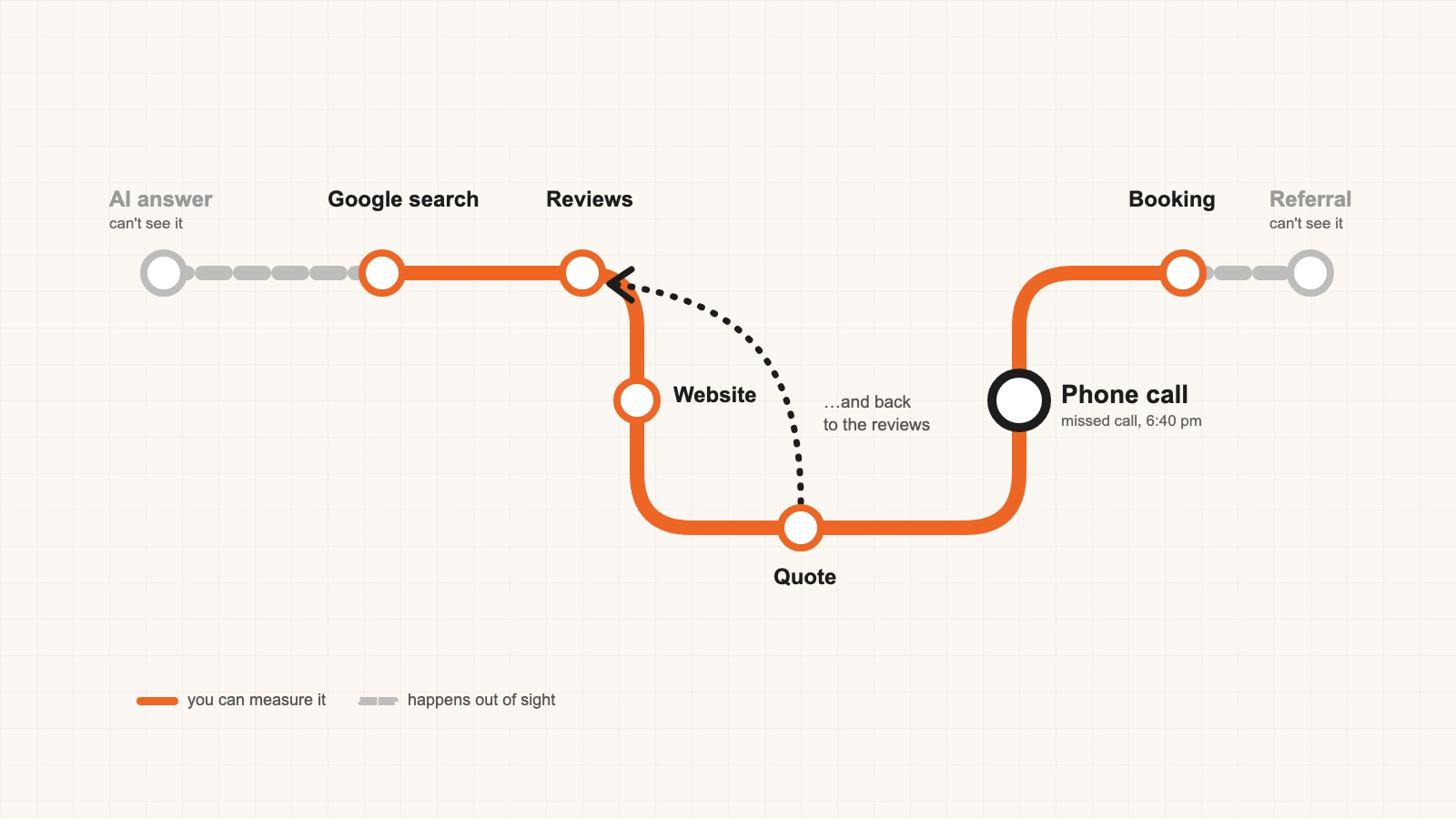
Rewards are popular because they’re easy to count: so many vouchers, so many sign-ups. The replacement needs a count too. Track every call, form and referral in a CRM, note where it came from, and mark which ones became participants. After three months you’ll know which channel brings the right people for the supports you have room for, and whether the referral page and coordinator emails are doing their job.
Where I land
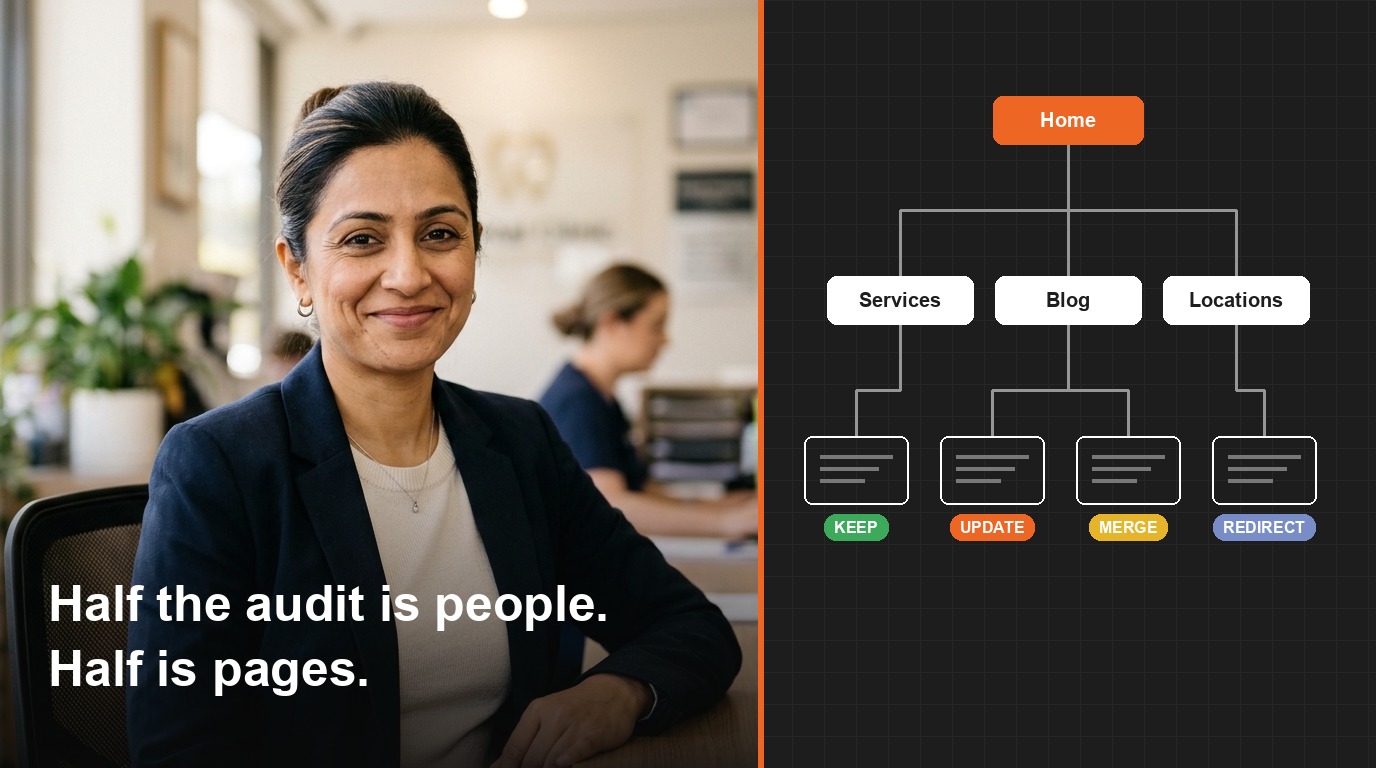
None of these changes is aimed at good providers, and none makes NDIS marketing harder. They take away the shortcuts. Start with your live ads, referral arrangements and intake scripts. Give each offer an owner, a decision (keep, change or pause) and a review date, write down what you changed and when, and put the budget into being easier to find, understand and refer to.
If you’d like us to review your ads, referral pages and intake copy (a marketing review, not a legal sign-off), get in touch.
FAQ
Can NDIS providers still run a referral program?
Yes, if it doesn’t reward anyone in a way that’s reasonably likely to influence their choice. A referral page, a fast response and updates to the referrer are fine. Vouchers, gift cards or gifts for each participant referred are what section 73VA targets from 20 November 2026.
When does the NDIS inducement ban start?
Item 9B of the Act’s commencement table sets the start as the day after three months from Royal Assent on 20 August 2026, which is 20 November 2026. The Department’s reform timeline lists 27 November. Plan for 20 November, since the Act is the binding source.
Can NDIS providers give gifts to support coordinators?
Not if the gift is reasonably likely to influence referrals. The Act says it doesn’t matter whether the person receiving it is the participant. Alcohol, cash or cash-like gifts and electronic devices can never be permitted. Useful information, like capacity updates, is not a gift.
What can NDIS advertising say?
Describe the supports you offer, where and for whom, truthfully. Don’t call anything “NDIS approved” or “100% NDIS funded”; the ACCC has fined businesses for it. Don’t use the NDIS logo without permission, and only registered providers can use the registered-provider marks. From 20 November 2026, don’t offer gifts or rewards to win participants.
What’s the best way to market NDIS services after the ban?
Be easy to choose: clear pages for each support and area, current capacity, a simple referral path for coordinators, ads targeted by service and suburb, and real stories shared with consent. Then measure new participants by channel, not clicks or sign-ups.