Why Most NDIS Providers Look Identical — And How to Stand Out in a Commoditised Market
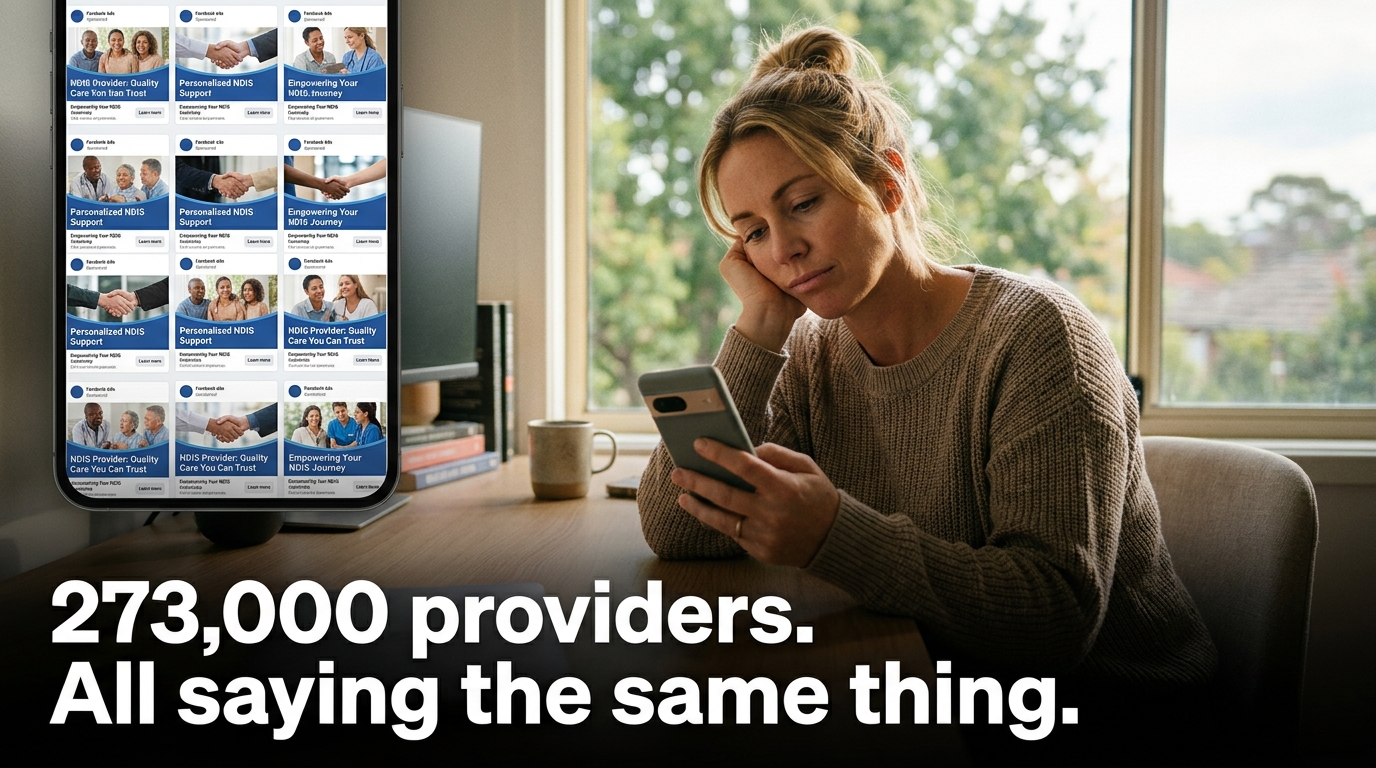
Max King scrolled through his competitors’ Facebook ads in 2019 and counted twelve providers using the exact same stock photo of a support worker pushing a wheelchair. Same messaging about “quality care.” Same promises of “person-centred support.” Same blue branding. That moment made him realise the NDIS market wasn’t just competitive — it was completely […]
Max King scrolled through his competitors’ Facebook ads in 2019 and counted twelve providers using the exact same stock photo of a support worker pushing a wheelchair. Same messaging about “quality care.” Same promises of “person-centred support.” Same blue branding. That moment made him realise the NDIS market wasn’t just competitive — it was completely commoditised. Every provider looked identical.
With 273,673 active NDIS providers now fighting for participants across Australia, this sameness has become the industry’s biggest marketing problem. Providers spend thousands on ads that generate zero phone calls because nobody can tell them apart.
The solution isn’t better Facebook ads management or more SEO. It’s having something worth saying once people find you.
The NDIS provider marketing strategy that everyone’s using (and why it fails)
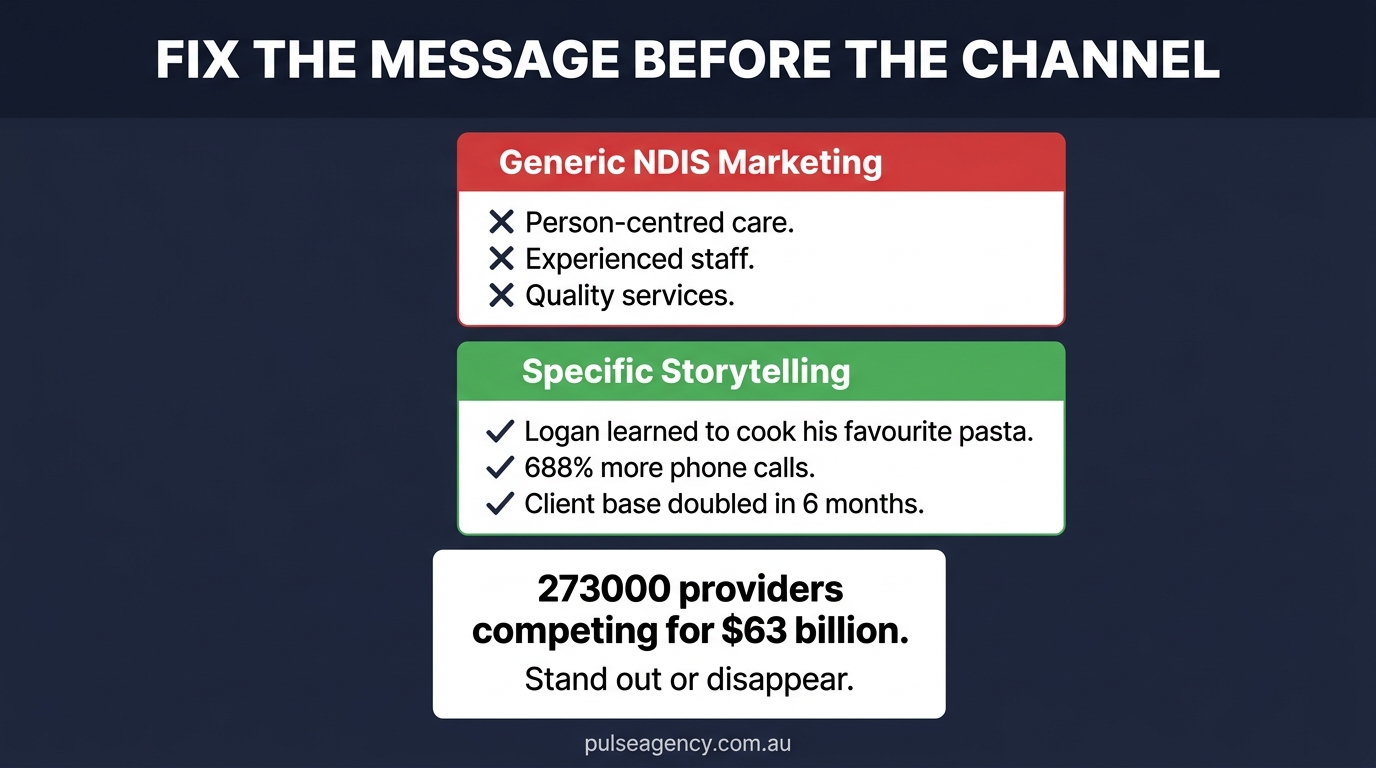
Walk through any provider’s website or social media and you’ll find the same tired phrases: “Quality care you can trust.” “Person-centred approach.” “Experienced team.” “Tailored support.”
Every provider believes these words differentiate them. In reality, they make everyone invisible.
The numbers tell the story. Australia’s NDIS market now manages $63,491 million in total annualised plan budgets across nearly 274,000 providers. That’s an average of just $232,000 per provider annually — if the money were split evenly, which it isn’t.
Most providers are fighting over scraps because they sound exactly like everyone else.
“When every provider promises the same thing, none of them are promising anything meaningful.”
— Nicolas Pustilnick
The commoditisation starts with industry training. New providers learn to speak in NDIS jargon — “capacity building,” “social participation,” “community access.” This language feels professional but sounds robotic to the families actually choosing providers.
Real people don’t search for “capacity building services.” They search for “help my son learn to cook” or “someone to take mum shopping.” The disconnect between what providers say and what participants want creates a marketing black hole.
Why your NDIS marketing looks like everyone else’s
Most providers believe professional means generic. They think differentiation comes from having better credentials or more services. But credentials don’t make phone calls. Stories do.
The typical provider website reads like a compliance document: “We provide high-quality support services designed to meet individual needs and goals while adhering to all NDIS requirements and maintaining professional standards.”
Compare that to: “Last month, Sarah learned to catch the bus to university by herself for the first time. Her mum cried happy tears.”
One sounds like every other provider. The other sounds like someone worth calling.
The fear driving generic messaging is risk aversion. Providers worry that being specific will turn people away. So they try to appeal to everyone and end up appealing to no one.
This plays out across every channel. Google Ads all bid on the same keywords (“NDIS support services,” “disability care provider”) with identical landing pages. Social media posts share the same stock photos and motivational quotes about inclusion.
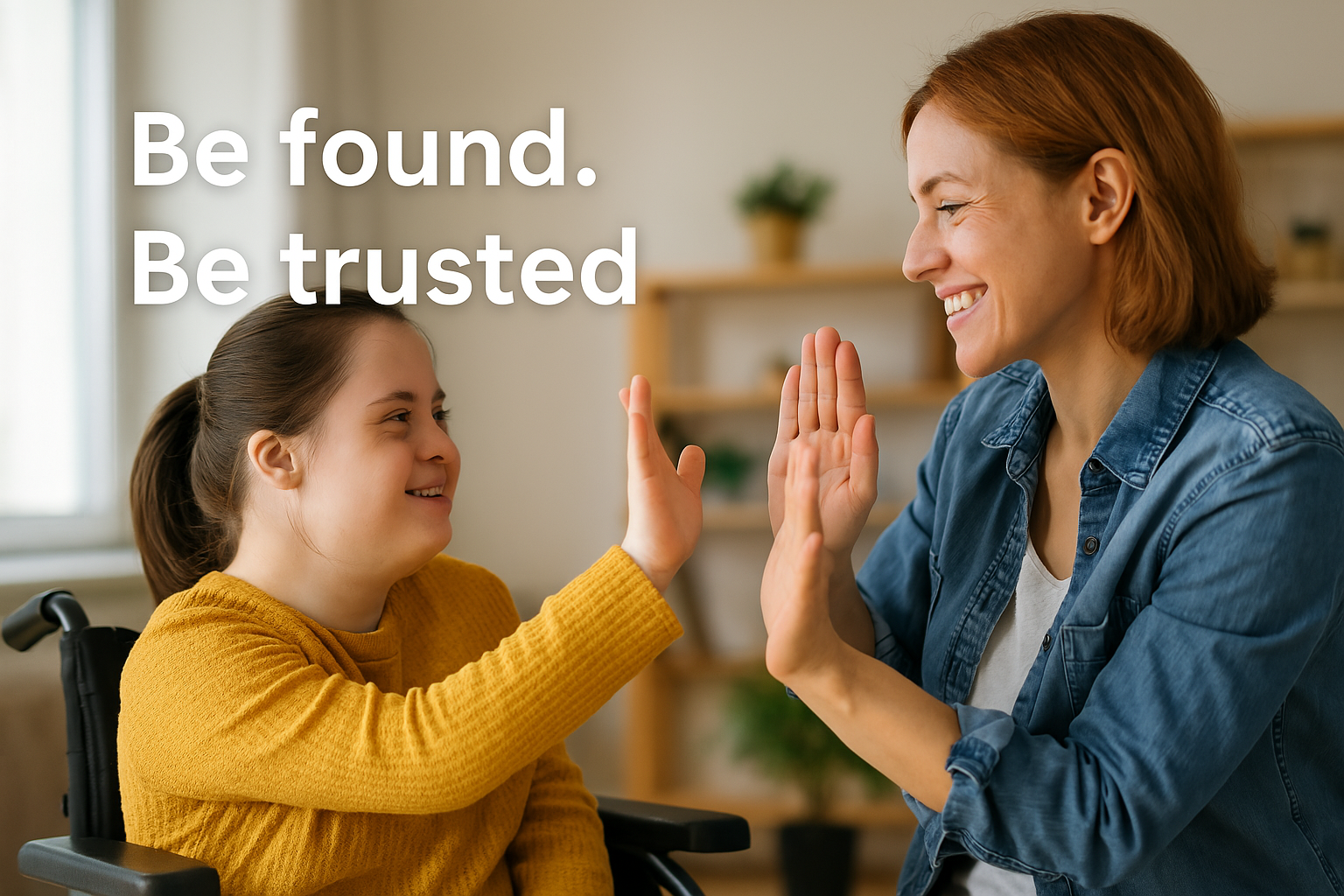
Even the websites look the same — blue colour schemes, smiling support workers, wheelchair imagery, and bullet points about “individualised care.”
The storytelling approach that drove 688% more phone calls
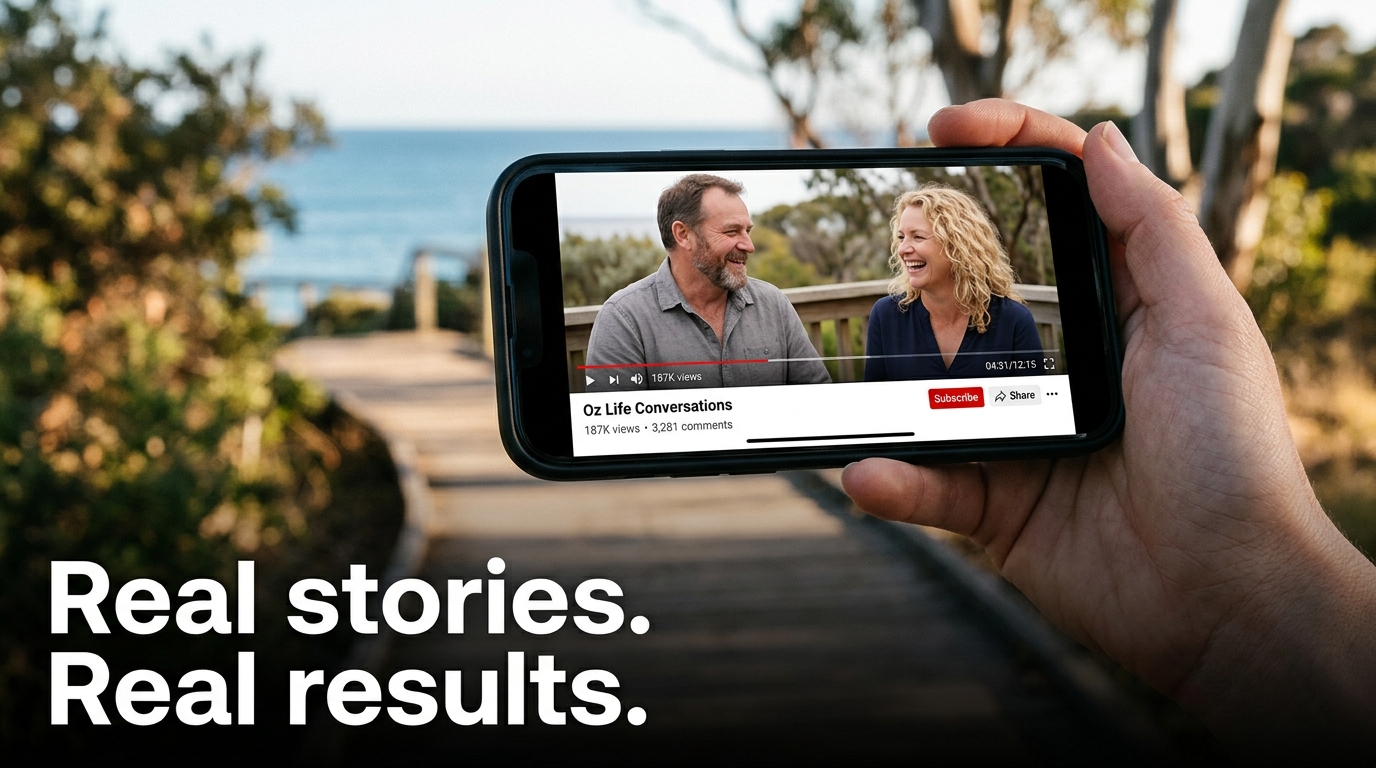
Max King at Auscare Support decided to try something different. Instead of talking about his team’s qualifications, he created a video featuring two real participants — Logan and Belinda — sharing their actual experiences.
The video wasn’t a polished testimonial. Logan talked about learning to use public transport. Belinda shared how support helped her maintain her independence after an accident. Real people. Real names. Real stories.
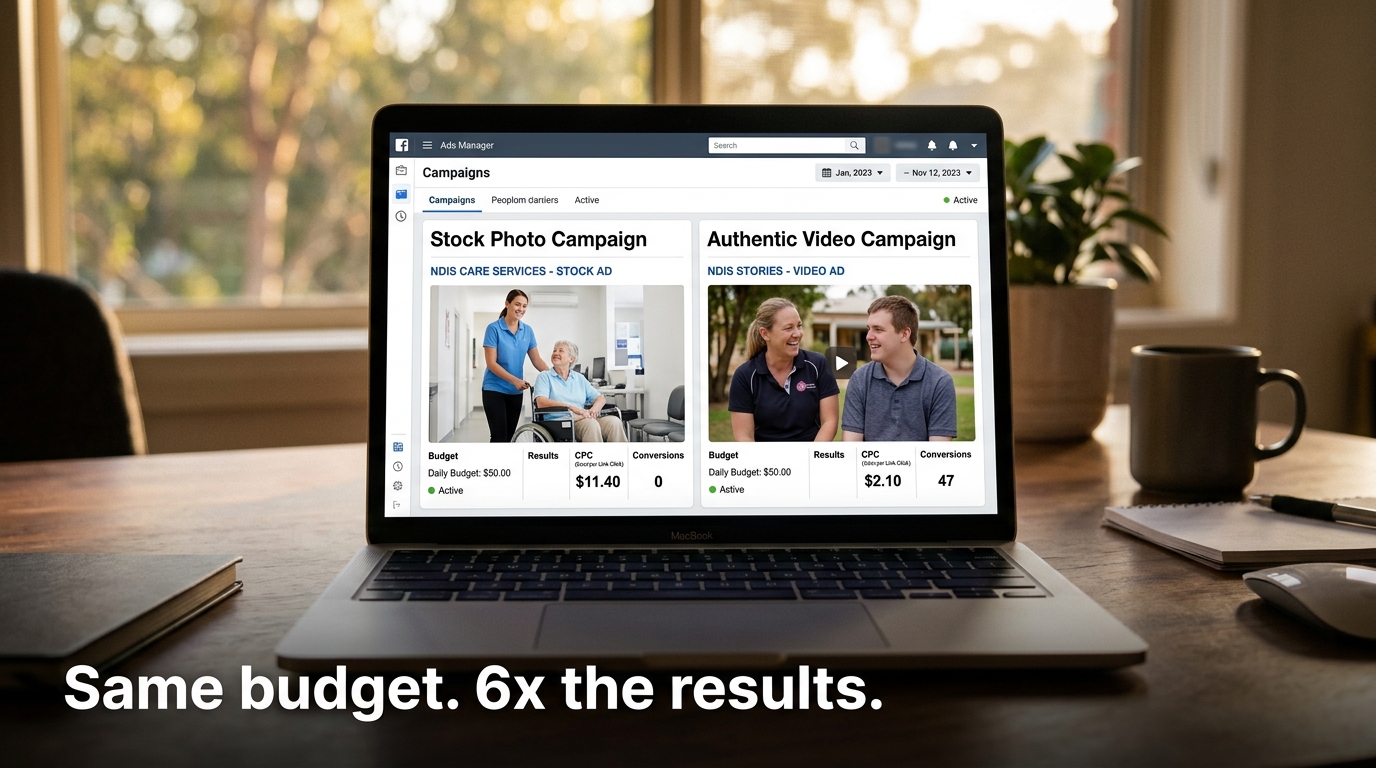
The results were immediate. Phone calls increased by 688%. Form submissions jumped 146%. Auscare Support doubled their client base in six months.
“I have worked with Nico and his team over 5 years and would be LOST without him,” says King. “The difference came from treating our participants as people with names and stories, not just ‘clients’ or ‘service users.'”
What made the approach work wasn’t professional video production. It was specificity. Instead of promising “quality support,” they showed what that support actually looked like in Logan and Belinda’s lives.
The video ran across Google Search, Facebook, Instagram and YouTube. But the channel wasn’t the magic — the message was. People shared it because it felt real, not because it was perfectly branded.
Three ways to build an NDIS provider marketing strategy that differentiates
Building differentiated marketing starts with an uncomfortable audit of your current messaging. Read your website copy out loud. If it sounds like it could describe any provider, you have work to do.
First: Stop talking about yourself. Most provider marketing focuses on team qualifications, years of experience, and service categories. Participants don’t care about your credentials until they trust you can help them.
Replace “Our experienced team provides comprehensive support services” with “We helped James get his first job at 24, and he’s been employee of the month twice.”
Second: Get specific about outcomes. “Improved independence” means nothing. “Learned to cook three meals and now lives in his own apartment” means everything.
Document real participant achievements. Not percentages or statistics — actual named outcomes with permission to share. The more specific you get, the more credible you become.
Third: Use real names and faces. Stock photos of generic support workers suggest you don’t have real participants to showcase. When possible, feature actual participants (with consent) sharing their own stories.
This approach works across every marketing channel. Your NDIS SEO strategies become more effective when you create content around specific participant outcomes rather than generic service descriptions.
Google Ads perform better when they promise specific help (“Learn independent living skills”) rather than vague support (“Quality NDIS services”). Social media generates more engagement when it shows real moments rather than stock imagery.
What happens when you fix the message first
The Auscare Support results weren’t a fluke. When providers differentiate their messaging, several things happen immediately.
Phone enquiries become more qualified. Instead of price shoppers asking “How much do you charge?”, calls come from families saying “We saw Logan’s story and wonder if you can help our son too.”
Referrals increase because your marketing becomes shareable. Generic provider ads get ignored. Videos about real people get forwarded to friends and family members.
Staff recruitment improves. Support workers want to join organisations with clear missions and meaningful stories. “We help people achieve independence” attracts better candidates than “We provide NDIS services.”
The financial impact compounds over time. Auscare Support’s client base doubled within six months, but the real value came from clients who stayed longer and referred more people.
Better conversion optimisation happens naturally when your messaging resonates. Website visitors spend more time reading real stories than scanning service lists. Enquiry forms get completed at higher rates when people understand what you actually do.
“Most NDIS providers are trying to win by being everything to everyone. The ones who win pick something specific and own it completely.”
— Nicolas Pustilnick
The competitive advantage becomes self-reinforcing. While other providers copy each other’s generic messaging, differentiated providers build distinctive reputations that are harder to replicate.
This doesn’t mean abandoning professionalism or compliance requirements. It means leading with humanity instead of bureaucracy. Real stories build trust faster than credentials ever will.
The market rewards providers who sound different because participants remember them. In a sea of identical messaging, specificity is the only life raft.
Start with your next marketing campaign
Don’t wait for a complete rebrand to implement these changes. Start with your next Facebook post, Google Ad, or website update.
Replace one generic statement with one specific story. Instead of “We support people with disabilities,” try “We helped Maria learn to drive, and she picked up her kids from school for the first time last Tuesday.”
Test the response. Track phone calls, not just clicks or impressions. The goal isn’t more traffic — it’s more qualified enquiries from people who understand what you do.
Document what works and expand from there. The providers who differentiate first will capture the best participants while everyone else fights over what’s left.
Your marketing doesn’t need to be perfect. It needs to be different. In a commoditised market, different wins every time.
Frequently Asked Questions
How many NDIS providers are there in Australia?
There are currently 273,673 active NDIS providers registered across Australia as of September 2025, making differentiation increasingly challenging in this crowded market.
What’s the biggest mistake NDIS providers make in their marketing?
The biggest mistake is using generic messaging about “quality care” that makes every provider sound identical. Successful providers focus on specific participant outcomes and real stories instead of industry jargon.
How can NDIS providers differentiate their marketing?
Start by auditing your current messaging for generic terms, then replace them with specific participant stories, named outcomes, and real examples. Focus on what makes your approach unique rather than what makes you sound professional.