Getting found in search is no longer just about ten blue links.
Google now answers more questions directly in the results, while tools like ChatGPT, Gemini and Perplexity are increasingly used to research companies, compare services and build shortlists.
The fundamentals still matter: a site Google can crawl, useful pages, clear signals about who you are and enough authority for search engines to trust you. What’s changed is the number of places where people can now discover a business before they ever reach its website.
At Pulse, SEO covers both sides of that. We work on technical health, the pages that need to rank, local search, internal structure and authority, while also looking at how the business is understood and referenced by AI search systems.
SEO strategy is led by founder Nico Pustilnick, who has worked in search for more than 15 years. Clients work directly with senior people rather than through a junior account layer.
How search has changed
Someone researching a supplier might start with a normal Google search, read an AI Overview, ask ChatGPT for alternatives and then come back to Google to check reviews or locations.
That changes the journey, but it doesn’t make traditional SEO irrelevant.
Pages still need to be crawlable and indexable. They still need to answer the search properly. Internal links, external mentions, reviews and clear information about the business still matter.
What has changed is that search engines and AI systems are increasingly assembling answers from multiple sources rather than simply returning a ranked list of pages.
That means we also look at things such as:
- whether the business is described consistently across the web
- which sources mention or reference it
- whether important pages contain clear, quotable answers
- how Google understands the relationship between the business, its services and its location
- whether the business appears when relevant questions are asked in AI search tools
Generative Engine Optimisation, or GEO, is the name often given to this part of the work. We don’t treat it as a separate trick or product. It sits alongside the rest of SEO.
There are no guaranteed positions in ChatGPT, Gemini, Perplexity or Google’s AI answers. Anyone promising them is selling certainty that doesn’t exist.
What we can do is make it much easier for search engines and AI systems to understand the business, trust the information around it and find something worth citing.
Who we work with
We provide SEO services to Sydney and Australian businesses where one good enquiry is worth a lot: law firms and professional services, NDIS and health providers, education and not-for-profit organisations, trades and property services, and ecommerce brands.
They usually come to us with one of these problems:
- Traffic has dropped and nobody can say why
- The homepage ranks for everything and the service pages rank for nothing
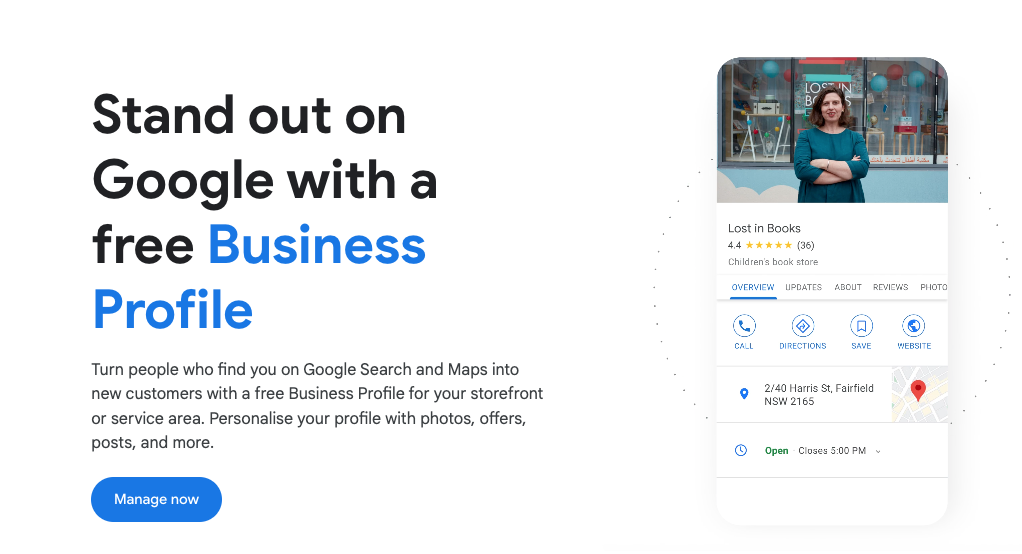
- Competitors show up in the map pack and they don’t
- The site was rebuilt and rankings went backwards
- SEO is “being done” but no one can show which enquiries it produces
- AI tools describe the business vaguely, or recommend competitors instead
Results
A few examples from our case studies:
- JFM & Co Employment Lawyers: a small Sydney firm that reached the first result in Google for “employment lawyers Sydney”, a highly competitive legal search, as documented in our employment lawyers case study.
- Bunny Studio: a global voiceover marketplace where keyword research and content lifted organic traffic by 38% and conversions by 18%. Read the Bunny Studio case study.
- Flatmate Finders: a strong brand losing traffic to aggressive competitors. We found link opportunities and gaps in competitors’ search coverage, and visitors grew 27% in six months. Read the Flatmate Finders case study.
- Auscare Support (NDIS): a combined program covering a new website, landing pages, video and a content hub built for organic search. Form submissions rose 146% and call volume 689% across the whole program, not from SEO alone. Read the Auscare case study.